

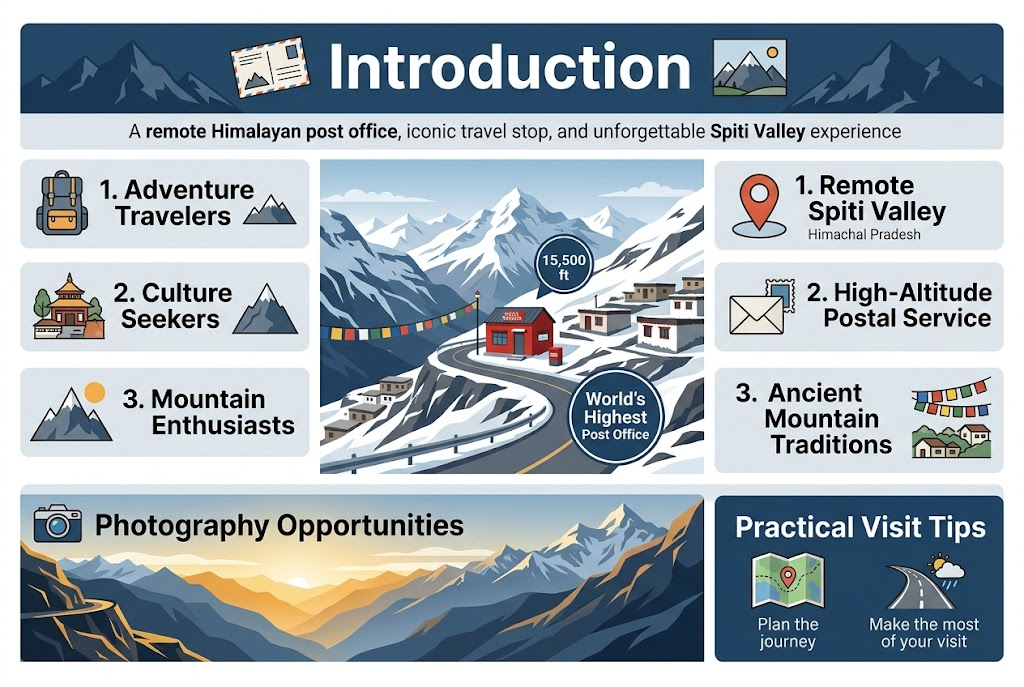
The Hikkim post office sits at a breathtaking 15,500 feet in the remote Spiti Valley, holding the official title as the world’s highest post office. This tiny postal outpost draws adventure travelers, mountain enthusiasts, and culture seekers who want to send mail from one of Earth’s most extreme locations.
For travelers planning their Spiti Valley adventure travel, this unique destination offers more than just bragging rights about mailing a postcard from record-breaking heights. You’ll discover how this high altitude postal service operates in one of India’s most isolated villages and experience authentic Himalayan village tourism.
We’ll explore the incredible journey to reach this remote mountain destination in Himachal Pradesh, where modern postal services meet ancient mountain traditions. You’ll also learn about the amazing photography opportunities surrounding Hikkim village and get practical advice for making the most of your visit to this extraordinary Spiti Valley attraction.
Discovering Hikkim Post Office’s Record-Breaking Location
Altitude Credentials That Earned Global Recognition
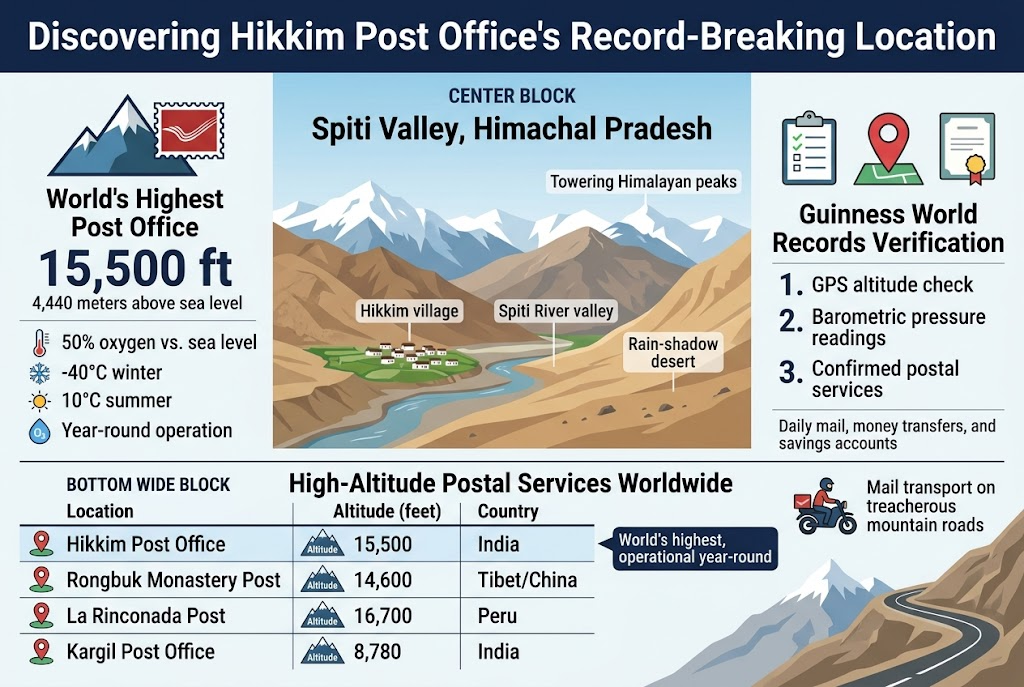
Perched at a breathtaking 15,500 feet above sea level, Hikkim post office stands as the world’s highest post office, a title that has captured the imagination of travelers and adventurers worldwide. This remarkable achievement places the small postal facility in the rarified air of the Spiti Valley, where oxygen levels drop to just 50% of what you’d find at sea level. The extreme altitude means that even the simple act of walking to mail a postcard becomes an adventure in itself.
The post office operates under conditions that would challenge even the most robust postal systems. Winter temperatures plummet to -40°C, while summer rarely sees the mercury rise above 10°C. These harsh conditions make the daily operations of this highest altitude post office nothing short of extraordinary, with postal workers demonstrating incredible dedication to maintain services in one of the planet’s most challenging environments.
Geographic Positioning Within Spiti Valley’s Landscape
Nestled in the remote Himalayan village of Hikkim, the post office sits strategically within the dramatic landscape of Spiti Valley in Himachal Pradesh. The facility occupies a commanding position overlooking the Spiti River valley, surrounded by towering peaks that scrape the sky at over 20,000 feet. This geographic positioning creates a natural amphitheater of snow-capped mountains that serves as a stunning backdrop for what might be the world’s most scenic postal facility.
The post office’s location within Spiti’s rain-shadow desert creates a unique microclimate. Despite being surrounded by some of the world’s highest peaks, the area receives minimal precipitation, creating an almost lunar landscape that photographers and adventure travelers find irresistible. The stark beauty of barren mountains contrasts sharply with the small green oasis of Hikkim village, where ancient irrigation channels bring life to this remote mountain destination.
Official Verification Process by Guinness World Records
The journey to official recognition as the world’s highest post office required extensive documentation and verification by Guinness World Records officials. The certification process involved precise altitude measurements using GPS technology and barometric pressure readings to confirm the exact elevation of 4,440 meters (15,500 feet) above sea level.
Guinness officials had to verify that the facility operates as a fully functional post office, providing regular postal services to local residents and visitors alike. This meant confirming daily operations, mail collection and delivery schedules, and the availability of standard postal services including money transfers and savings accounts. The verification team also documented the challenging logistics of mail transport, which often involves motorcycle couriers navigating treacherous mountain roads for hours to reach the nearest major postal hub.
Comparison With Other High-Altitude Postal Services Worldwide
While Hikkim post office holds the official title, several other high-altitude postal facilities around the world compete for recognition in the extreme postal services category:
| Location | Altitude (feet) | Country | Special Features |
|---|---|---|---|
| Hikkim Post Office | 15,500 | India | World’s highest, operational year-round |
| Rongbuk Monastery Post | 14,600 | Tibet/China | Near Everest Base Camp |
| La Rinconada Post | 16,700 | Peru | Higher but irregular service |
| Kargil Post Office | 8,780 | India | Strategic military location |
What sets Hikkim apart from these competitors is its consistent, year-round operation despite extreme weather conditions. While some high-altitude facilities operate seasonally or with limited services, the Spiti Valley post office maintains regular hours and full postal services throughout the year. The dedication of its staff and the support of local communities ensure that this Himalayan village tourism destination continues to serve both residents and the thousands of visitors who make the challenging journey to mail postcards from the roof of the world.
Journey to the Remote Himalayan Village of Hikkim
Transportation options from major cities to Spiti Valley
Reaching Hikkim village requires careful planning since this remote Himalayan destination sits far from conventional tourist circuits. The journey typically begins from major cities like Delhi or Chandigarh, both serving as primary access points for Spiti Valley travel.
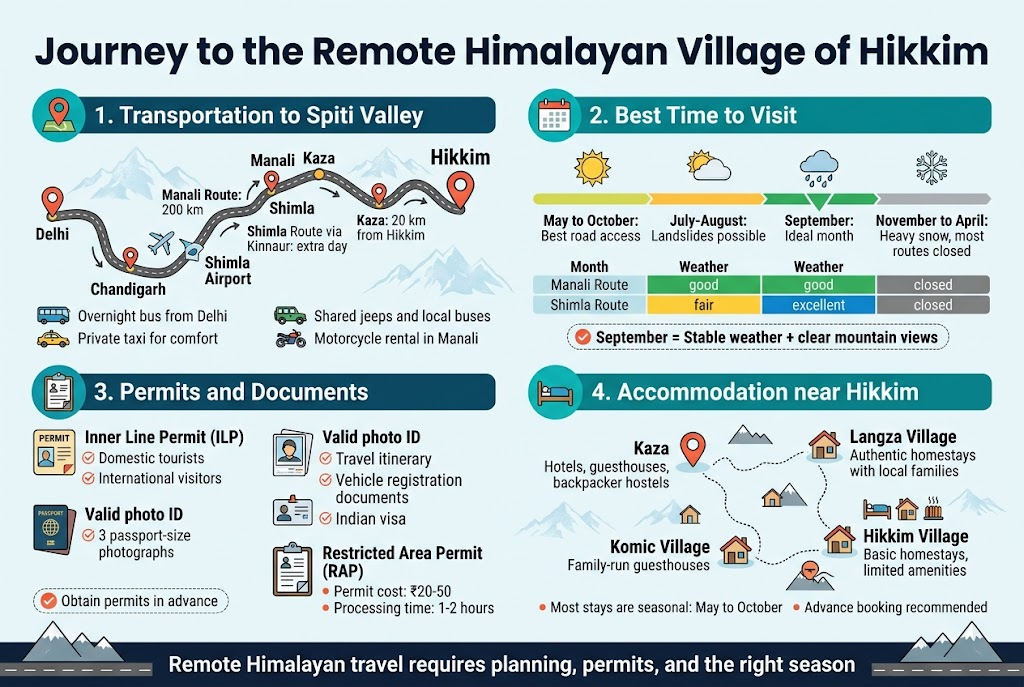
From Delhi, travelers can choose between flying to Shimla Airport (approximately 240km from Kaza) or taking an overnight bus to Shimla or Manali. The Manali route via Rohtang Pass remains the most popular approach during summer months, covering roughly 200km of winding mountain roads to reach Kaza, Spiti’s main town. From Kaza, Hikkim village lies another 20km away.
Alternatively, the Shimla route through Kinnaur offers spectacular scenery but requires an extra day of travel. This path winds through the treacherous Hindustan-Tibet Highway, crossing several high-altitude passes before entering Spiti Valley.
Private taxis provide the most comfortable option, though shared jeeps and local buses offer budget-friendly alternatives. Many travelers rent motorcycles in Manali for an adventurous self-drive experience to the world’s highest post office. Local transport from Kaza to Hikkim includes shared taxis and occasional bus services, though hiring a private vehicle ensures flexibility for exploring multiple villages.
Best seasonal timing for accessible road conditions
Road access to Spiti Valley remains heavily dependent on weather conditions, making timing critical for visiting Hikkim post office. The region experiences extreme seasonal variations that dramatically affect travel feasibility.
Summer Season (May to October): Peak travel season offers the most reliable road conditions. The Manali-Kaza route typically opens by late May when snow clears from Rohtang Pass. Roads remain accessible through October, with July and August experiencing occasional landslides during monsoon periods.
Winter Season (November to April): Heavy snowfall blocks most access routes, making Hikkim virtually unreachable. Only the Shimla route via Kinnaur sometimes remains partially accessible, though conditions stay unpredictable and dangerous.
| Month | Manali Route | Shimla Route | Weather Conditions |
|---|---|---|---|
| May-June | Good | Excellent | Clear, pleasant |
| July-August | Fair (landslides) | Good | Monsoon season |
| September-October | Excellent | Excellent | Perfect weather |
| November-April | Closed | Limited access | Heavy snow |
September stands out as the ideal visiting month, offering stable weather, clear mountain views, and comfortable temperatures for exploring the highest altitude post office without weather-related travel disruptions.
Essential permits and documentation requirements
Visiting Spiti Valley requires specific permits since the region borders sensitive international boundaries with Tibet and China. All domestic and international travelers must obtain Inner Line Permits (ILP) before entering certain restricted areas near Hikkim village.
Domestic tourists can obtain permits from:
- Sub-Divisional Magistrate offices in Kaza, Rekong Peo, or Shimla
- Online through the Himachal Pradesh government portal
- Designated checkposts at Samdo and other entry points
Required documents include:
- Valid photo identification (Aadhar card, passport, or driver’s license)
- Three passport-size photographs
- Completed application form with travel itinerary
- Vehicle registration documents (for private vehicles)
International visitors need additional documentation:
- Valid passport with Indian visa
- Restricted Area Permit (RAP) from Foreigners Regional Registration Office
- Accompanied travel with registered tour operators in certain zones
Permits typically cost ₹20-50 for domestic tourists and remain valid for specific durations. Some areas around Hikkim post office fall within restricted zones requiring special permissions, particularly for foreign nationals. Processing usually takes 1-2 hours at checkposts, though obtaining permits in advance prevents delays during the journey to this remote mountain destination.
Accommodation choices in nearby villages
Accommodation options around Hikkim village range from basic guesthouses to more comfortable homestays, though luxury facilities remain limited in this remote Himalayan region. Most travelers base themselves in nearby villages offering better infrastructure while making day trips to visit the world’s highest post office.
Kaza (20km from Hikkim): The valley’s main town provides the widest accommodation range, including hotels, guesthouses, and backpacker hostels. Popular choices include Hotel Deyzor, offering comfortable rooms with heating, and several budget guesthouses near the bus stand.
Langza Village (8km from Hikkim): This fossil-rich village offers authentic homestay experiences with local families. Accommodation includes traditional houses with basic amenities, providing genuine cultural immersion while staying close to Hikkim post office.
Komic Village (5km from Hikkim): Known as the world’s highest connected village by road, Komic features several family-run guesthouses. The Komic Monastery Guest House offers simple rooms with stunning valley views.
Hikkim Village: Limited accommodation exists directly in Hikkim, primarily consisting of basic homestays with local families. These options provide the most authentic experience but lack modern amenities like attached bathrooms or consistent heating.
Most accommodations operate seasonally from May through October, with advance booking recommended during peak summer months. Expect shared bathrooms, limited electricity hours, and basic bedding in remote villages, though the warm hospitality of Spiti Valley locals compensates for minimal facilities.
Unique Postal Services Operating at 15,500 Feet
Daily operations despite extreme weather conditions
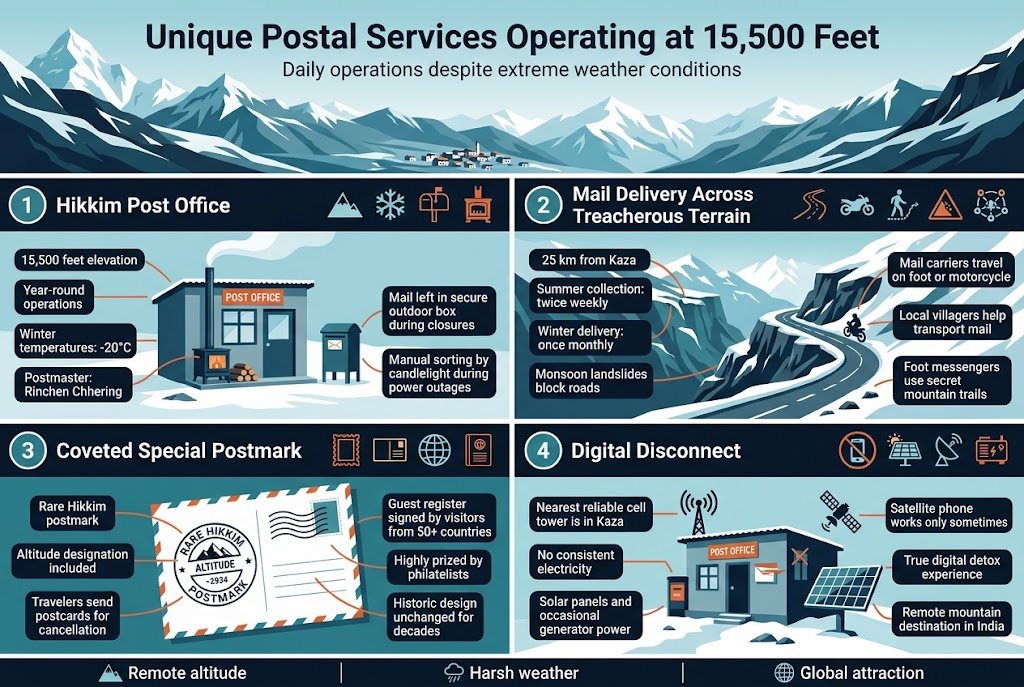
The Hikkim post office operates year-round at its breathtaking 15,500 feet elevation, making it a true marvel of human determination. Postmaster Rinchen Chhering braves sub-zero temperatures that regularly plummet to -20°C during winter months, maintaining daily operations even when snow blankets the village for weeks on end.
The building itself is a simple single-room structure that doubles as the postmaster’s residence, heated by a traditional wood-burning stove. During harsh winter storms, the office sometimes remains closed for several days, but mail collection continues as visitors leave letters in a secure box outside.
What makes these high altitude postal services truly remarkable is the commitment to serving both locals and tourists despite the brutal mountain weather. The postmaster manually sorts mail by candlelight during power outages, which are frequent due to the remote location and extreme conditions.
Mail delivery systems across treacherous mountain terrain
Getting mail to and from the world’s highest post office involves an intricate network that would challenge any postal system. Mail collection happens twice weekly during summer months, but winter deliveries drop to once monthly due to blocked mountain passes.
The closest major postal hub sits in Kaza, approximately 25 kilometers away through winding mountain roads that become impassable during heavy snowfall. Mail carriers navigate these treacherous paths on foot or motorcycle, carrying precious cargo of letters, postcards, and packages.
During monsoon season, landslides frequently block the main route, forcing mail carriers to take alternate paths that can add hours to their journey. The dedication of these postal workers ensures that even the most remote Himalayan village tourism destination stays connected to the outside world.
Local villagers often assist with mail transport, creating an informal but reliable support network. When roads become completely inaccessible, mail sometimes reaches Hikkim through neighboring villages via foot messengers who know secret mountain trails.
Special postmark collections coveted by philatelists
Collectors worldwide treasure the distinctive Hikkim postmark, making it one of the most sought-after stamps in philatelic circles. The unique postmark features the altitude designation and creates an instant conversation piece for anyone receiving mail from this extraordinary location.
Many visitors specifically travel to Spiti Valley to send postcards and letters bearing this exclusive postmark. The post office maintains a guest register where travelers from over 50 countries have signed their names, creating a fascinating record of international visitors to this remote outpost.
Philatelic enthusiasts often request special cancellation services, and the postmaster accommodates these requests with remarkable patience. Some collectors have built entire exhibitions around correspondence from Hikkim, showcasing the dramatic journey these letters take from the world’s highest postal facility.
The postmark design has remained largely unchanged for decades, adding to its authenticity and appeal among serious collectors who value consistency and historical significance.
Digital connectivity challenges and solutions
Internet connectivity at Hikkim remains sporadic at best, with the nearest reliable cell tower located several kilometers away in Kaza. Visitors often discover their mobile devices show no signal bars, creating a true digital detox experience that many find refreshing.
The post office lacks consistent electricity, relying on solar panels and occasional generator power. This makes digital postal services nearly impossible, reinforcing the traditional letter-writing experience that draws visitors from around the globe.
Satellite phone services occasionally work during clear weather, but high costs and unreliable connections make them impractical for regular use. The Spiti Valley travel guide experience here emphasizes the beauty of disconnection from our hyper-connected world.
Local authorities have discussed installing better communication infrastructure, but the extreme altitude and harsh weather conditions make such projects incredibly expensive and technically challenging. Many visitors appreciate this digital isolation as part of the authentic remote mountain destinations India experience that Hikkim provides.
Cultural Immersion in Spiti’s Traditional Mountain Life
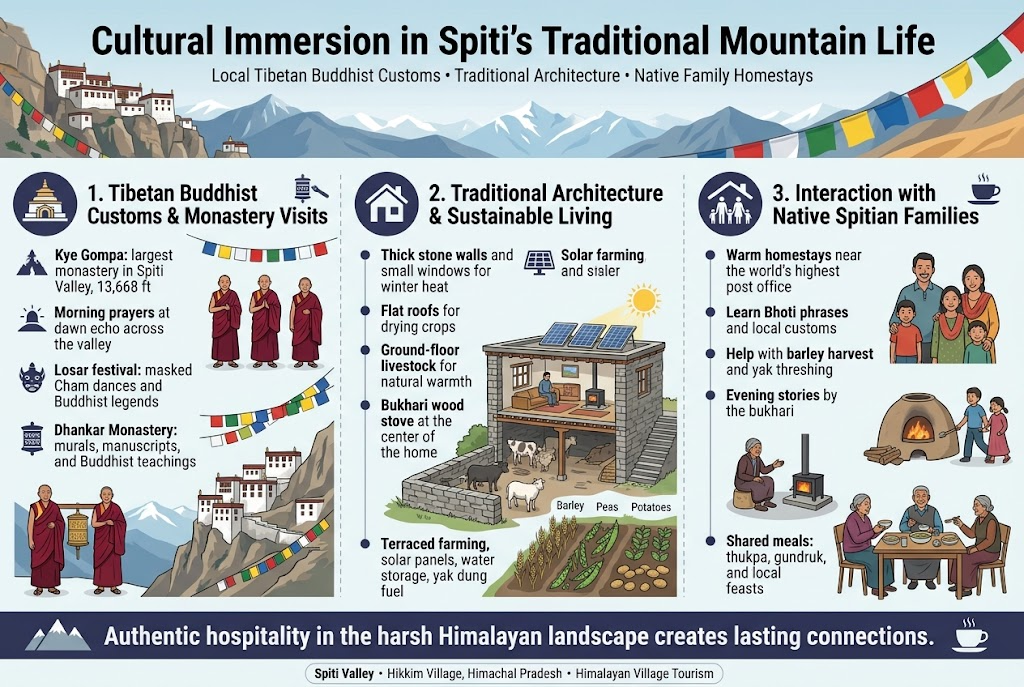
Local Tibetan Buddhist Customs and Monastery Visits
The high-altitude desert landscape of Spiti Valley serves as home to deeply rooted Tibetan Buddhist traditions that have flourished for over a thousand years. Visitors exploring the Hikkim village Himachal Pradesh region discover monasteries perched on dramatic clifftops, their prayer flags fluttering against the stark mountain backdrop.
Key Monastery (Kye Gompa), just a short drive from Hikkim, stands as the largest monastery in Spiti Valley at 13,668 feet. The monks here maintain centuries-old practices, conducting morning prayers at dawn when the mountain air carries their chants across the valley. Travelers often join these sessions, experiencing the meditative atmosphere firsthand.
Daily life revolves around Buddhist principles, with locals spinning prayer wheels during their evening walks and maintaining small shrines in their homes. The community celebrates festivals like Losar (Tibetan New Year) with masked dances called Cham, where performers in elaborate costumes reenact Buddhist legends.
Dhankar Monastery, another significant site, houses ancient murals and manuscripts that showcase the region’s spiritual heritage. The resident lamas welcome visitors for discussions about Buddhist philosophy, offering insights into meditation practices and the interconnectedness of all living beings.
Traditional Architecture and Sustainable Living Practices
Spitian architecture reflects centuries of adaptation to extreme weather conditions and limited resources. Traditional homes feature thick stone walls, flat roofs for drying crops, and small windows to conserve heat during brutal winters when temperatures plummet to -30°C.
The ingenious design includes separate sections for humans and livestock, with animals housed on the ground floor to provide natural heating. Wood-burning stoves called “bukhari” occupy central positions in living spaces, their chimneys running through walls to maximize heat distribution.
Sustainable practices define daily life in this remote mountain destinations India location. Families cultivate barley, peas, and potatoes in terraced fields irrigated by glacier-fed streams. Solar panels have gradually replaced some traditional energy sources, though many homes still rely on dried yak dung as fuel.
Water conservation remains critical, with households collecting and storing every precious drop during brief summer months. Traditional food preservation techniques include drying vegetables and churning yak milk into cheese that lasts through harsh winters.
Building materials come entirely from the local environment – stone quarried from nearby hills, timber from rare high-altitude trees, and clay mixed with barley straw for insulation. This approach creates structures that blend seamlessly with the landscape while providing essential protection from the elements.
Interaction Opportunities with Native Spitian Families
Homestays offer the most authentic way to connect with local families near the world’s highest post office. These family-run accommodations provide intimate glimpses into daily routines, from morning prayers to evening meals prepared over traditional clay ovens.
Host families eagerly share their knowledge of local customs, teaching guests simple Bhoti phrases and explaining the significance of various cultural practices. Children often become informal guides, leading visitors to hidden spots around their villages while practicing their English skills.
Participating in agricultural activities creates memorable bonding experiences. Guests can help with barley harvesting, witness the traditional threshing process using yaks, or assist in preparing winter food supplies. These hands-on activities foster genuine connections while supporting local livelihoods.
Evening conversations around the bukhari reveal fascinating stories about life in one of India’s most isolated regions. Elders share tales of trading expeditions to Tibet, changes they’ve witnessed over decades, and their hopes for preserving traditional ways while embracing beneficial modern developments.
Local families often invite travelers to join special occasions like weddings or religious ceremonies. These invitations provide rare opportunities to witness authentic celebrations, complete with traditional music, dance, and elaborate feasts featuring local specialties like thukpa and gundruk.
The warmth and hospitality of Spitian families contrasts sharply with the harsh mountain environment, creating lasting friendships that often extend well beyond initial visits to this remarkable corner of the Himalayan village tourism landscape.
Photography and Adventure Opportunities Around Hikkim
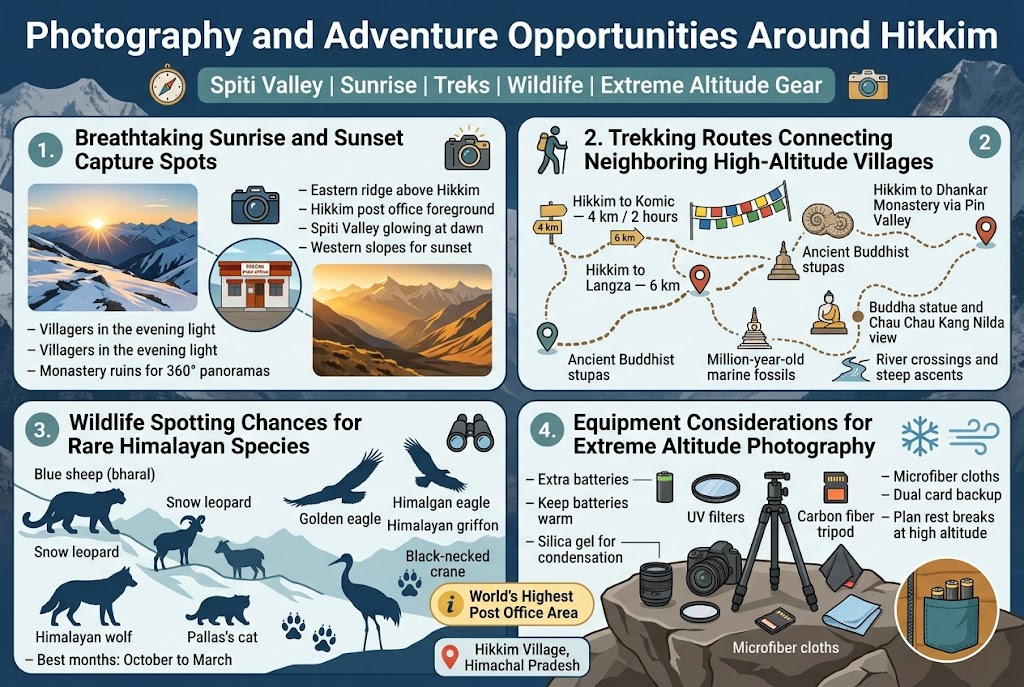
Breathtaking sunrise and sunset capture spots
The dramatic landscape around Hikkim village offers photographers some of the most spectacular golden hour shots you’ll find anywhere in the Himalayas. Head to the eastern ridge above the village before dawn to catch the sun’s first rays painting the Spiti Valley in warm hues. The Hikkim post office becomes a striking foreground element against the snow-capped peaks that stretch endlessly into Tibet.
For sunset photography, position yourself on the western slopes overlooking the Spiti River valley. The interplay of shadows and light across the barren mountains creates an otherworldly atmosphere that changes by the minute. Local villagers often gather here in the evenings, providing authentic cultural elements for your compositions.
The monastery ruins perched on nearby hills offer elevated vantage points that showcase the vastness of this remote mountain destination India has to offer. These spots require a short hike but reward you with unobstructed 360-degree views perfect for panoramic shots.
Trekking routes connecting neighboring high-altitude villages
Several well-defined trails branch out from Hikkim, making it an excellent base for Spiti Valley adventure travel. The most popular route leads to Komic village, recognized as Asia’s highest motorable village at 15,027 feet. This 4-kilometer trek takes roughly 2 hours and passes through ancient Buddhist stupas and prayer flag installations.
The trail to Langza village winds through fossil-rich terrain where you can spot million-year-old marine fossils embedded in the rocky landscape. This moderate 6-kilometer hike connects you with the famous Buddha statue overlooking Langza and provides stunning views of Chau Chau Kang Nilda peak.
For experienced trekkers, the challenging route to Dhankar Monastery via the Pin Valley offers multi-day adventure opportunities. This trek showcases the raw beauty of Spiti Valley attractions while testing your high-altitude endurance across varied terrain including river crossings and steep ascents.
Wildlife spotting chances for rare Himalayan species
The high-altitude ecosystem around Hikkim supports several endangered and rare species that wildlife photographers dream of capturing. Blue sheep (bharal) frequently graze on the slopes above the village, especially during early morning hours when they descend to drink from mountain streams.
Snow leopards roam these mountains, though sightings require patience and luck. Local guides familiar with their movement patterns can significantly improve your chances. The best months for snow leopard tracking are October through March when they follow their prey to lower elevations.
Himalayan wolves occasionally pass through the valley, and the elusive Pallas’s cat has been spotted in the rocky outcrops surrounding Hikkim village Himachal Pradesh. Bird enthusiasts can photograph golden eagles, Himalayan griffons, and the rare black-necked crane that migrates through this region.
Equipment considerations for extreme altitude photography
Photographing at the world’s highest post office location demands specialized gear that can handle extreme conditions. Temperature fluctuations between -20°C at night and 15°C during the day stress camera batteries significantly. Pack extra batteries and keep them warm inside your jacket to maintain charge.
Condensation becomes a major issue when moving equipment between temperature extremes. Use sealed bags with silica gel packets when transitioning from cold outdoor conditions to heated indoor spaces. UV filters are essential at this altitude where ultraviolet radiation is intense and can damage both your lens and sensor.
Tripods need extra stability in the thin air and strong winds common at this elevation. Carbon fiber tripods work better than aluminum as they’re less affected by temperature changes. Lens cloths freeze solid, so bring microfiber cloths and store them in warm pockets.
Memory cards can fail in extreme cold, so shoot in RAW format with dual card backup systems. The low oxygen levels at this highest altitude post office location will leave you breathless, so plan for frequent rest breaks while carrying heavy camera gear.
Practical Tips for Maximizing Your High-Altitude Postal Experience
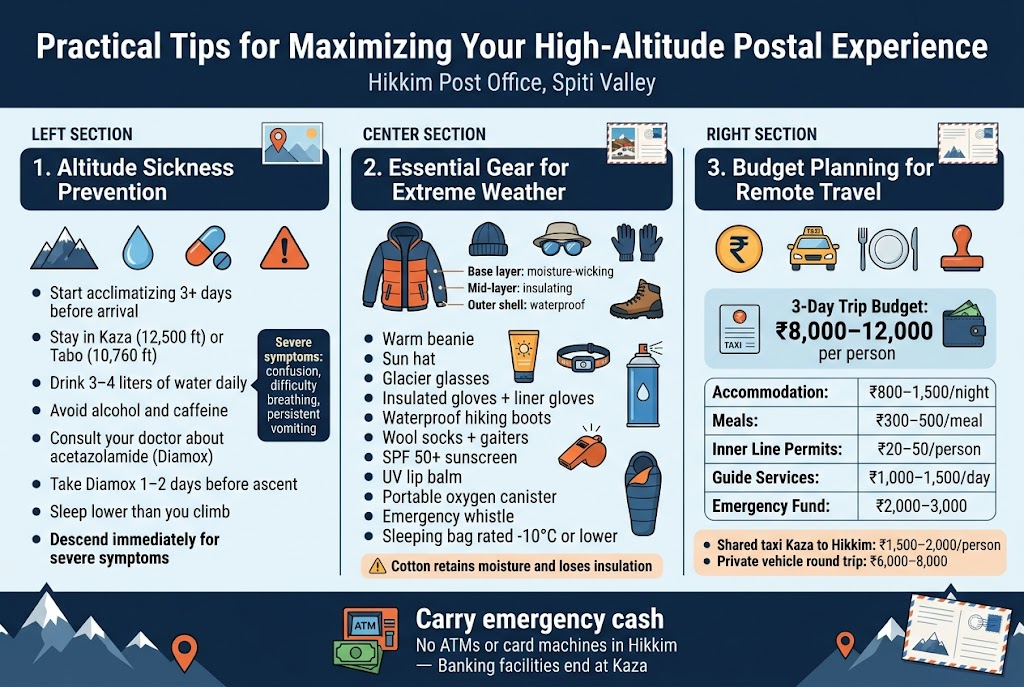
Altitude Sickness Prevention and Acclimatization Strategies
Visiting Hikkim post office at 15,500 feet demands serious preparation for altitude-related challenges. Start your acclimatization process at least three days before reaching the world’s highest post office by staying in Kaza (12,500 feet) or Tabo (10,760 feet). This gradual ascent helps your body adjust to decreasing oxygen levels.
Hydration becomes critical at high altitudes. Drink 3-4 liters of water daily, but avoid alcohol and caffeine which can worsen dehydration. Pack acetazolamide (Diamox) after consulting your doctor – take it 1-2 days before ascent to prevent acute mountain sickness symptoms like headaches, nausea, and fatigue.
Sleep lower than you climb when possible. If you experience severe symptoms like confusion, difficulty breathing, or persistent vomiting, descend immediately to lower altitudes. The Spiti Valley travel guide recommendation is to never ignore warning signs at these extreme elevations.
Essential Gear for Extreme Weather Protection
Weather at Hikkim village Himachal Pradesh changes rapidly, with temperatures dropping below freezing even in summer. Pack layered clothing systems: moisture-wicking base layers, insulating mid-layers, and waterproof outer shells. Merino wool and synthetic materials work best – avoid cotton which retains moisture and loses insulation when wet.
Your gear checklist should include:
- Head protection: Warm beanie, sun hat, and glacier glasses for UV protection
- Hand warmth: Insulated gloves plus liner gloves for dexterity when writing postcards
- Foot care: Waterproof hiking boots, wool socks, and gaiters for snow protection
- Sun defense: SPF 50+ sunscreen and lip balm with UV protection
- Emergency items: Headlamp, portable oxygen canister, and emergency whistle
Sleeping bags rated for -10°C minimum are essential if staying overnight near the highest altitude post office. The combination of altitude and weather makes hypothermia a real risk even during warmer months.
Budget Planning for Remote Location Expenses
Remote mountain destinations India like Hikkim come with premium pricing due to transportation challenges and limited infrastructure. Budget ₹8,000-12,000 per person for a 3-day trip including permits, accommodation, and meals.
Transportation costs dominate expenses. Shared taxis from Kaza to Hikkim cost ₹1,500-2,000 per person, while private vehicles run ₹6,000-8,000 for the round trip. Fuel surcharges apply due to difficult terrain and distance from supply points.
| Expense Category | Budget Range (₹) |
|---|---|
| Accommodation | 800-1,500/night |
| Meals | 300-500/meal |
| Inner Line Permits | 20-50/person |
| Guide Services | 1,000-1,500/day |
| Emergency Fund | 2,000-3,000 |
Food costs increase significantly due to transportation logistics. Basic dal-rice meals cost ₹300-400, while packed lunches for day trips run ₹200-300. Stock up on snacks and energy bars in Kaza before heading to Spiti Valley attractions as options become limited in remote villages.
Keep emergency cash reserves since ATMs and card machines don’t exist in Hikkim. Banking facilities end at Kaza, making cash the only payment method accepted at this remarkable high altitude postal service destination.
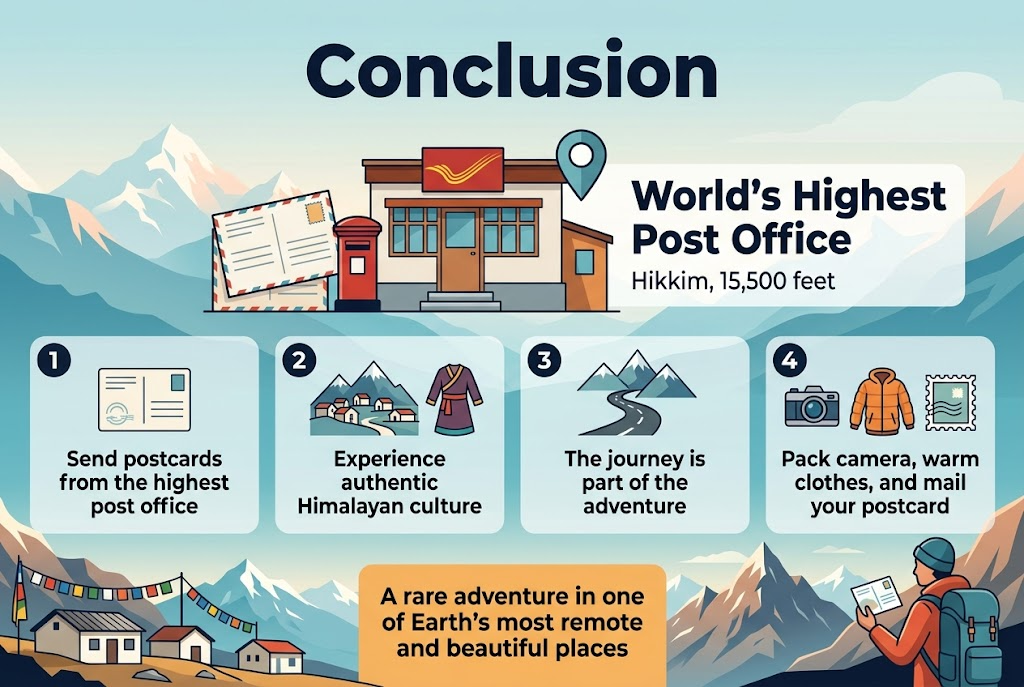
The world’s highest post office at Hikkim stands as more than just a postal service – it’s a gateway to experiencing authentic Himalayan culture at 15,500 feet. From sending postcards that carry the unique charm of high-altitude mail delivery to witnessing traditional Spiti Valley life, this remote destination offers travelers something truly special. The journey to reach this record-breaking location becomes part of the adventure itself, taking you through breathtaking landscapes and into the heart of a community that has preserved its mountain traditions for generations.
Planning your visit to Hikkim Post Office means preparing for both the physical challenges of high-altitude travel and the incredible rewards that await. Bring your camera, pack warm clothes, and get ready to send mail from a place few people ever reach. This isn’t just about checking off a bucket list item – it’s about connecting with a remarkable corner of the world where modern postal services meet ancient mountain culture. Your postcard from the world’s highest post office will carry with it the story of an unforgettable adventure in one of the most remote and beautiful places on Earth.


