

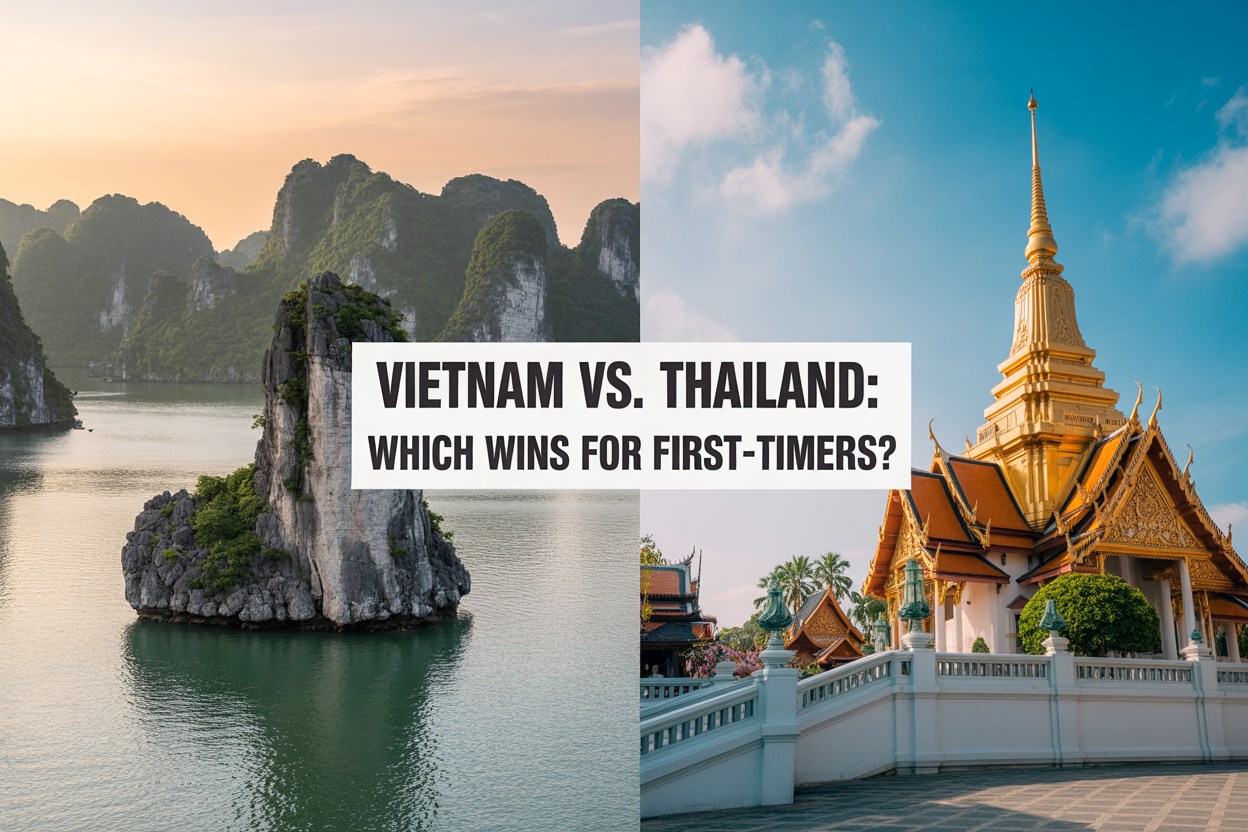
Vietnam vs. Thailand: Which Wins for First-Timers?
You’ve finally decided to book that first Southeast Asia trip — now comes the hard part: Vietnam or Thailand? Both countries sit at the top of nearly every travel bucket list, and for good reason. But they offer very different experiences, and picking the wrong one for your travel style can make your first trip feel overwhelming instead of amazing.
This guide is for first-time travelers who want a real, honest comparison before they commit to flights and itineraries. No fluff, just the stuff that actually matters when you’re starting from scratch.
We’ll break down three things that trip up most first-timers: how easy each country is to get around, what your daily budget actually looks like on the ground, and which destinations are genuinely beginner-friendly versus which ones sound great on Instagram but require more planning than a first trip allows.
By the end, you’ll have a clear picture of whether Vietnam or Thailand is the right fit for you — not just what’s trending online.
Understanding the First-Timer Experience in Southeast Asia
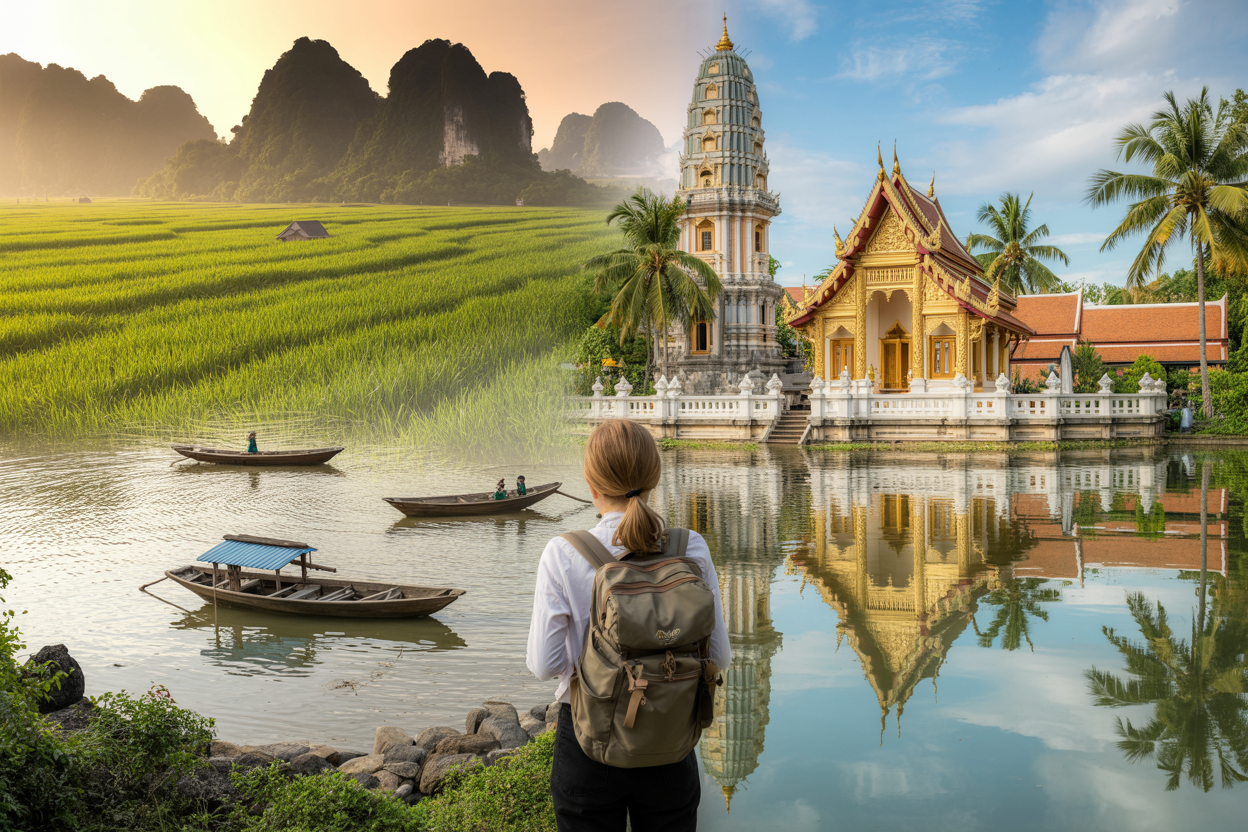
Why Vietnam and Thailand Are Top Picks for New Travelers
When people start dreaming about their first trip to Southeast Asia, two destinations almost always rise to the top of the list: Vietnam and Thailand. And honestly, it makes a lot of sense.
Both countries have spent decades welcoming international visitors, which means the infrastructure for tourism is solid. You’ll find well-worn backpacker trails, plenty of English signage in tourist areas, ATMs that actually work, and a massive range of accommodation options at every price point. For someone stepping into Southeast Asia for the first time, that kind of support system matters more than you might think.
Thailand has long been considered the easiest Southeast Asia country to visit, thanks to its highly developed tourism industry, smooth domestic transport links, and a culture that has genuinely embraced the hospitality of international guests. Bangkok, Chiang Mai, and the southern islands have all been welcoming first-timers for decades, and it shows in how smoothly everything tends to run.
Vietnam, on the other hand, brings something a little different to the table. It’s a long, narrow country packed with wildly diverse landscapes, from the terraced rice fields of the north to the buzzing street food culture of Ho Chi Minh City in the south. It’s become increasingly popular as a best Southeast Asia destination for beginners who want to feel like they’ve discovered something without sacrificing safety or ease of travel.
Here’s a quick look at why both countries earn their spots at the top:
| Factor | Vietnam | Thailand |
|---|---|---|
| Tourism Infrastructure | Well-developed in major cities | Extremely developed nationwide |
| English Spoken | Common in tourist zones | Very common throughout |
| International Flights | Good connections via Hanoi & Ho Chi Minh City | Excellent hub in Bangkok |
| First-Timer Friendliness | High | Very High |
| Unique Cultural Appeal | Strong | Strong |
What First-Timers Should Prioritize When Choosing a Destination
The biggest mistake new travelers make when weighing up a Vietnam vs Thailand for first-timers debate is comparing the countries like they’re identical boxes you’re choosing between. They’re not. The right choice depends entirely on what you want out of the trip.
Here are the things you should actually be thinking about before booking:
Your Travel Style
- If you want beach time and easy relaxation: Thailand’s southern islands — Koh Samui, Koh Lanta, Phuket — are hard to beat. The beaches are world-class, the vibes are set up for unwinding, and getting between islands is straightforward.
- If you’re drawn to culture, history, and food adventures: Vietnam has an edge. Destinations like Hoi An, Hanoi’s Old Quarter, and the Mekong Delta offer something that feels genuinely immersive rather than just tourist-friendly.
Your Budget
Both countries are affordable compared to Western destinations, but they’re not the same. Vietnam tends to run slightly cheaper for food and accommodation, especially when you step outside the major tourist hubs. Thailand’s party islands and popular resorts can quietly eat through a budget faster than expected.
How Much Time You Have
Vietnam is a long country — traveling from north to south takes time. If you only have 7–10 days, trying to see all of Vietnam can feel rushed. Thailand’s geography makes it easier to hit a variety of experiences (city, temple culture, beaches) in a shorter window.
Comfort with the Unknown
If this is your very first time traveling independently in Asia and the idea of navigating language barriers or chaotic traffic feels intimidating, Thailand’s more polished tourism setup can feel like a softer landing. Vietnam is absolutely manageable, but it does require a bit more flexibility and willingness to go with the flow.
How to Set Realistic Expectations for Both Countries
One of the most useful things you can do before a first-time Southeast Asia trip is to check the version of these countries that lives in your head against what they actually look like on the ground.
Thailand is not all cocktails on white-sand beaches. Yes, those beaches exist and they’re gorgeous, but popular spots like Phuket and Koh Phi Phi are genuinely crowded with tourists, especially during peak season. If you’re expecting a secluded paradise, you’ll need to do some digging beyond the obvious choices.
Vietnam is not an untouched hidden gem. Places like Sa Pa, Ha Long Bay, and Hoi An are on virtually every traveler’s radar now. They’re popular for good reason, but “off the beaten path” requires real effort to find.
A few realistic expectations worth keeping in mind for both destinations:
- Weather matters — a lot. Both countries have distinct wet and dry seasons, and the weather can vary dramatically depending on which region you’re visiting. Check the climate for your specific destination and travel window, not just the country as a whole.
- Tourist prices are real. In both Vietnam and Thailand, prices in tourist areas are higher than what locals pay. That’s normal. Budget accordingly and don’t be surprised when the street food stall near the big temple costs twice what it does two streets away.
- Scams exist, but they’re avoidable. Tuk-tuk overcharging in Bangkok, motorbike rental tricks in Vietnam — these things happen, but they’re rarely serious and almost always avoidable with a little research before you go.
- The food will be incredible. This is one expectation you can hold onto without any caveats. Both countries genuinely deliver when it comes to eating well at every budget level.
Setting yourself up with honest expectations — rather than Instagram-filtered fantasies — is what turns a good trip into a great one, regardless of which country you choose.
Ease of Getting Around
Navigating Vietnam’s Long North-to-South Layout
Vietnam is a fascinating country to explore, but its geography throws a curveball at first-timers right away. The country stretches roughly 1,650 kilometers from Hanoi in the north to Ho Chi Minh City in the south — about the same distance as driving from New York to Miami. That length means getting around takes real planning, and underestimating travel time is one of the most common mistakes new visitors make.
The good news? Vietnam has several solid options for moving between regions:
- Domestic flights are affordable and fast. Budget airlines like VietJet Air, Bamboo Airways, and Vietnam Airlines connect major cities like Hanoi, Da Nang, Hoi An (via Da Nang), and Ho Chi Minh City. A flight from Hanoi to Ho Chi Minh City typically costs between $20–$60 USD if booked in advance.
- The Reunification Express train is a classic experience that runs the full length of the country. It’s slow — the full journey takes around 30–35 hours — but shorter legs like Hanoi to Hue or Da Nang to Ho Chi Minh City are very manageable and genuinely scenic.
- Open bus tickets (also called “hop-on, hop-off” or “open tour buses”) are popular with backpackers. You buy one ticket and can stop at multiple cities along the route — great for Southeast Asia backpacking comparison budgets.
- Grab (ride-hailing app) works extremely well in cities like Hanoi and Ho Chi Minh City and is probably the easiest way to get around within urban areas without haggling over fares.
The challenge for first-timers is that Vietnam doesn’t have a central hub you can use as a base. You’ll need to commit to a general direction — north to south or vice versa — and work out your route before you go. This adds a layer of complexity that Thailand simply doesn’t have.
Within Cities
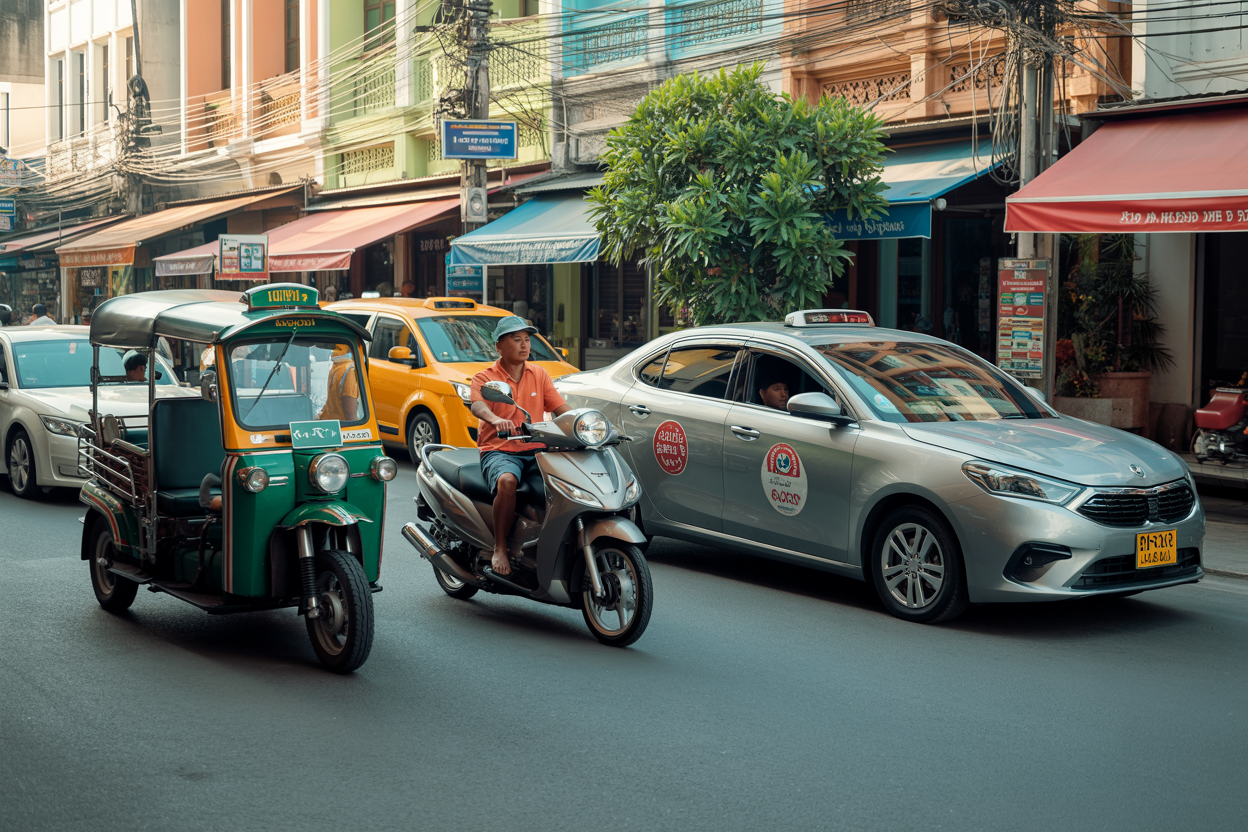
Getting around inside Vietnamese cities can feel chaotic at first. Traffic in Hanoi and Ho Chi Minh City is famously intense, with motorbikes dominating every road. Crossing the street literally requires confidence and a slow, steady walk — the traffic flows around you. Once you get used to it, it’s actually kind of fun. Grab handles most of your in-city transport needs cleanly and affordably.
Thailand’s Well-Connected Transport Hubs and Tourist Routes
If Vietnam is a long road trip with multiple stops, Thailand feels more like a well-oiled travel machine built specifically for first-time visitors. Bangkok acts as the country’s beating heart — a central hub from which you can reach almost anywhere else in Thailand within a few hours.
Getting around Thailand is notably smoother for beginners:
| Transport Option | Coverage | First-Timer Friendly? |
|---|---|---|
| BTS Skytrain & MRT (Bangkok) | Central Bangkok | Excellent — easy to use |
| Domestic flights | Bangkok to Chiang Mai, Phuket, Koh Samui, etc. | Very easy, affordable |
| Overnight trains | Bangkok to Chiang Mai, Surat Thani | Comfortable, scenic |
| Long-tail boats & ferries | Island hopping in the south | Simple, well-organized |
| Songthaews (shared trucks) | Northern cities like Chiang Mai | Cheap and reliable |
| Grab app | Bangkok and major cities | Works great |
Bangkok’s Suvarnabhumi Airport is one of Southeast Asia’s busiest and best-connected international hubs. From there, domestic flights are cheap and frequent — you can often find Bangkok to Chiang Mai or Bangkok to Phuket flights for under $30 USD. The tourist trail in Thailand is also incredibly well-worn, which means guesthouses, tour operators, and locals near popular attractions are deeply accustomed to helping first-time international visitors.
The island-hopping routes in the south — think Koh Samui, Koh Phangan, and Koh Tao — are served by reliable ferry schedules that make planning a breeze. Even the slower, more remote northern routes around Chiang Mai and Pai are manageable on rented scooters or via local songthaews.
For anyone wondering about the easiest Southeast Asia country to visit, Thailand consistently ranks near the top, and transport infrastructure is a big reason why.
Visa Requirements and Entry Simplicity for Each Country
Visa rules change frequently, so always double-check the latest requirements through official government sources before you travel. That said, here’s a practical snapshot of where things typically stand:
Thailand
- Visa-on-arrival or visa exemption is available for travelers from around 60+ countries, including the US, UK, EU nations, and Australia.
- Most nationalities get 30 days on arrival at airports, with possible extensions at immigration offices.
- Thailand’s e-visa system is available for countries that don’t qualify for exemption, and the process is straightforward.
- No vaccination requirements at the time of writing (check current rules before travel).
Vietnam
- Vietnam has expanded its visa-free access significantly in recent years. Travelers from over 45 countries — including the US, UK, Germany, France, Australia, and many others — now receive 45 days visa-free entry.
- The e-visa system is simple, affordable (around $25 USD), and processes within 3 business days. It’s valid for 90 days and allows multiple entries.
- The e-visa has made Vietnam dramatically easier to enter compared to just a few years ago — a welcome change for the first time Southeast Asia trip crowd.
Quick Comparison
| Factor | Vietnam | Thailand |
|---|---|---|
| Visa-free access | 45+ countries, 45 days | 60+ countries, 30 days |
| E-visa availability | Yes, easy and affordable | Yes, straightforward |
| Processing time | ~3 business days | Fast (often instant at border) |
| Cost (where applicable) | ~$25 USD | ~$35 USD on arrival fee (where applicable) |
| Extensions | Available in-country | Available in-country |
Both countries are relatively welcoming for international tourists, and neither requires jumping through excessive hoops. Vietnam’s recent expansion of visa-free access has evened the playing field considerably.
Safety and Solo Travel Friendliness Compared
Both Vietnam and Thailand are genuinely safe destinations for first-timers, including solo travelers and women traveling alone. Neither country appears on serious travel advisory lists for most Western nations, and violent crime against tourists is rare. That said, “safe” doesn’t mean completely without risk — the usual travel smarts apply everywhere.
Thailand’s Safety Landscape
Thailand has a long, well-established backpacker and solo travel culture. Cities like Bangkok and Chiang Mai have entire neighborhoods — Khao San Road, Nimman Road — that exist almost entirely to serve solo travelers. Finding travel companions, trusted tour operators, and English-speaking help is easy almost everywhere on the tourist circuit.
Common concerns in Thailand:
- Tuk-tuk and taxi scams in Bangkok, especially around major temples (“the temple is closed today, but I’ll take you somewhere better” is a classic)
- Gem scams targeting tourists in Bangkok
- Drink spiking in party areas like Koh Phangan and Pattaya — be aware in nightlife settings
- Road safety — traffic accidents, especially on scooters, are a real risk and a leading cause of tourist injuries
Overall, scams in Thailand tend to be low-level financial nuisances rather than dangerous situations. Being aware of the common ones before you go means you’ll almost certainly avoid them.
Vietnam’s Safety Landscape
Vietnam is very safe by global standards. Most visitors complete their trips without a single serious issue. Petty theft — particularly bag snatching from motorbikes — is something to watch for in busy urban areas like Ho Chi Minh City. Keeping your bag on the side away from the road and staying alert in crowded markets goes a long way.
Common concerns in Vietnam:
- Motorbike bag snatching in Ho Chi Minh City — keep valuables out of easy reach
- Overcharging at markets and restaurants without posted prices — always ask the price before ordering or buying
- Traffic — the motorbike chaos is its own hazard for pedestrians
- Fake taxis — use Grab or look for the official metered taxis of reputable companies (Mai Linh and Vinasun in Ho Chi Minh City)
Solo Travel Verdict
| Category | Vietnam | Thailand |
|---|---|---|
| Solo female travel | Generally safe, use standard precautions | Very solo-friendly, huge community |
| English spoken widely | Major tourist areas yes, rural areas less so | Very widely spoken on tourist routes |
| Tourist infrastructure | Growing fast, slightly less mature | Extremely well-developed |
| Nightlife safety | More low-key, fewer party risks | Active nightlife, be more vigilant |
| Scam risk | Moderate (overcharging, fake taxis) | Moderate (tuk-tuk scams, gems) |
For Vietnam travel tips for beginners around safety: stay in established guesthouses, download Grab before you land, and trust your gut in unfamiliar areas. For Thailand, the same applies — and specifically educate yourself on the common Bangkok scams before arriving, since they target new arrivals almost exclusively.
Both countries reward confident, prepared travelers with incredibly warm, welcoming experiences. The safety concerns in both places are manageable — they just look slightly different from each other.
Cost of Travel on a First-Timer Budget
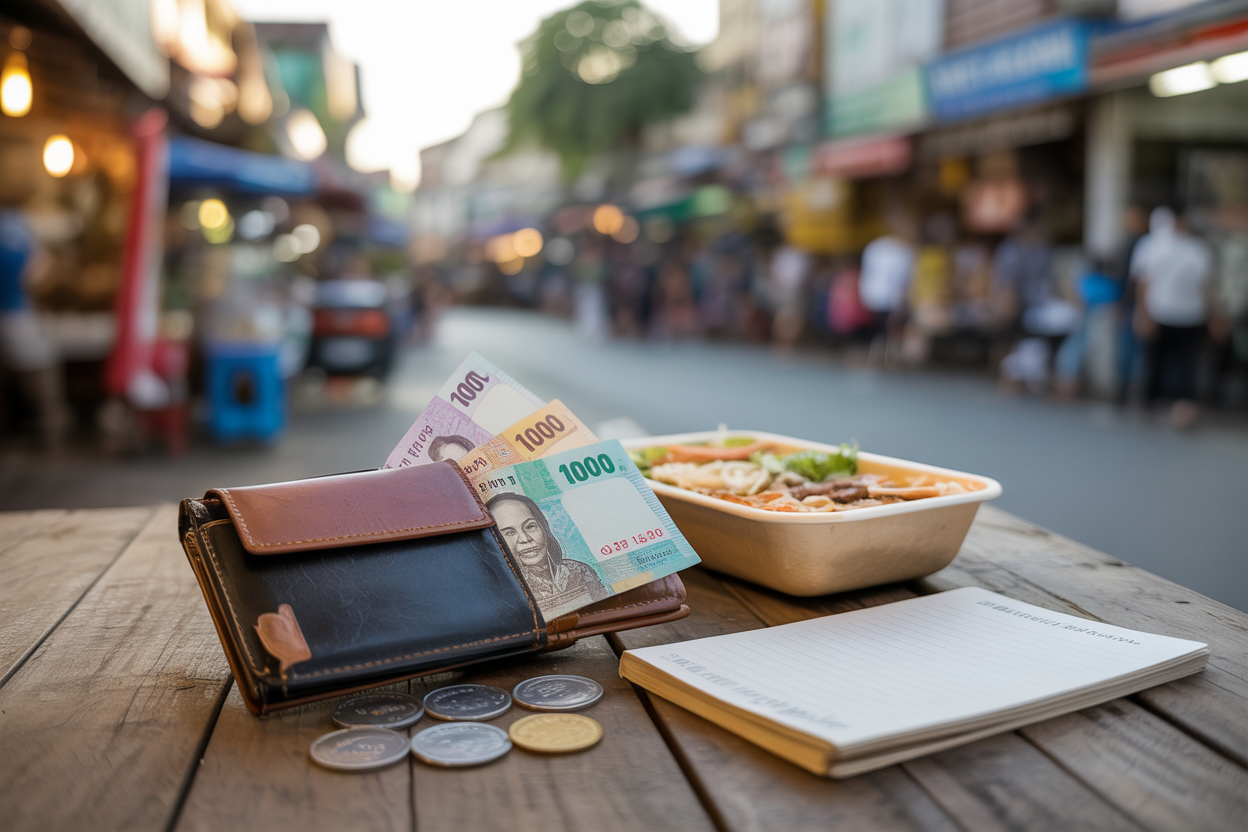
Daily Budget Breakdown for Vietnam
Vietnam is one of those rare destinations where your money genuinely feels like it multiplies the moment you land. For first-timers trying to stretch their dollars without sacrificing a good experience, Vietnam delivers in a big way.
Here’s a realistic daily budget breakdown depending on your travel style:
| Travel Style | Accommodation | Food | Transport | Activities | Daily Total |
|---|---|---|---|---|---|
| Budget Backpacker | $8–$12 (hostel dorm) | $5–$10 | $3–$6 | $5–$10 | $21–$38 |
| Mid-Range Traveler | $25–$50 (private room) | $15–$25 | $5–$10 | $10–$20 | $55–$105 |
| Comfort Seeker | $70–$150 (boutique hotel) | $30–$50 | $15–$25 | $20–$40 | $135–$265 |
A few things worth knowing about spending money in Vietnam:
- Street food is your best friend. A bowl of phở or bánh mì from a street stall costs anywhere from $1 to $2.50. Sitting down at a local restaurant for a full meal rarely exceeds $5–$7.
- Transport is dirt cheap. Grab (the Southeast Asian equivalent of Uber) is widely available in cities like Hanoi and Ho Chi Minh City. A 20-minute ride typically runs under $3.
- Entrance fees are low. Most temples, museums, and natural sites charge between $1 and $5. Halong Bay cruises are the biggest splurge at $80–$200+ depending on the package, but they’re generally considered worth every cent.
- Bargaining is part of the culture at markets, but fixed-price shops and restaurants don’t usually expect it. Don’t over-haggle — it’s not well received at small family-run stalls.
Cities like Hanoi and Hoi An tend to be slightly cheaper than Ho Chi Minh City, which has grown more expensive in recent years. Still, even in the south, a first-timer on a moderate budget can live very comfortably.
Daily Budget Breakdown for Thailand
Thailand has long been the go-to destination for first-time Southeast Asia travelers, and part of that reputation comes from how easy it is to manage your money there. That said, Thailand does skew a bit pricier than Vietnam — especially in tourist-heavy areas like Bangkok, Phuket, and Koh Samui.
Here’s how the numbers break down:
| Travel Style | Accommodation | Food | Transport | Activities | Daily Total |
|---|---|---|---|---|---|
| Budget Backpacker | $10–$15 (hostel dorm) | $8–$15 | $5–$10 | $5–$15 | $28–$55 |
| Mid-Range Traveler | $35–$70 (private room) | $20–$35 | $10–$20 | $15–$30 | $80–$155 |
| Comfort Seeker | $80–$200 (hotel/resort) | $35–$70 | $20–$40 | $25–$60 | $160–$370 |
Key things to keep in mind about spending in Thailand:
- Pad thai from a street cart costs $1–$2, but eating at sit-down restaurants — especially those catering to tourists — can quickly run $10–$20 per meal.
- Island life inflates your budget fast. Destinations like Koh Tao, Phuket, and Koh Samui have much higher accommodation and food prices compared to Chiang Mai or smaller northern towns. Budget travelers often find the north far more wallet-friendly.
- Transport between destinations adds up. Overnight trains and buses are reasonably priced, but domestic flights (Bangkok to Phuket, for example) can add $40–$100 to your spend. Booking in advance helps significantly.
- Temple entrance fees are low — most are free or cost a small donation — but big tourist attractions like Phi Phi Islands boat tours run $30–$60.
- Chiang Mai is a budget gem. If you’re watching your spending, Chiang Mai consistently offers the best value in the country with excellent food, great hostels, and tons to do at a fraction of the cost of the south.
Thailand’s tourism infrastructure is so well-developed that you rarely feel like you’re navigating anything blindly. ATMs, English menus, and tourist-friendly transport are practically everywhere — which is a huge bonus for first-timers.
Where Your Money Goes Further as a Newcomer
When comparing Vietnam vs Thailand budget travel, Vietnam comes out ahead on raw cost. Your daily spend in Vietnam will almost always be lower than a comparable day in Thailand, especially once you factor in food and accommodation outside of major cities.
That said, the “best value” country isn’t always just about price — it’s about what you actually get for your money as someone visiting for the first time.
Vietnam Wins On:
- Everyday food costs — local meals are genuinely among the cheapest in all of Southeast Asia
- Accommodation value — mid-range hotels and guesthouses punch well above their price point
- Domestic transport — sleeper buses and trains connecting cities like Hanoi, Hue, Hoi An, and Ho Chi Minh City are both affordable and efficient
- Natural attractions — Halong Bay, Phong Nha caves, and Sapa are world-class experiences without world-class price tags (with the exception of some Halong Bay cruise packages)
Thailand Wins On:
- Island experiences — you simply can’t match Thailand’s beach destinations, and while the price is higher, the experience is hard to replicate elsewhere for the money
- Ease of booking and planning — the sheer volume of tour operators, travel agencies, and English-language resources means you spend less time figuring things out and more time actually enjoying yourself
- Food variety for the price — Thai street food is diverse, absolutely delicious, and while slightly pricier than Vietnam’s, still outstanding value compared to Western standards
- Short-trip efficiency — if you only have 7–10 days, Thailand’s compact layout and excellent transport links mean you can fit a lot in without spending extra on unnecessary travel days
Quick Comparison Summary
| Category | Vietnam | Thailand |
|---|---|---|
| Average daily budget (backpacker) | $25–$38 | $30–$55 |
| Street food meal | $1–$3 | $1.50–$4 |
| Budget hostel dorm | $8–$12 | $10–$15 |
| Mid-range private room | $25–$50 | $35–$70 |
| Domestic travel costs | Low | Low–Moderate |
| Island/resort costs | Moderate | High |
| Overall value for first-timers | ⭐⭐⭐⭐⭐ | ⭐⭐⭐⭐ |
For travelers on a tight first-time Southeast Asia backpacking budget, Vietnam is the stronger pick purely on numbers. But if you’re willing to spend a little more for a smoother, more accessible experience — especially on the beaches — Thailand makes a compelling case that the extra cost is absolutely justified.
Must-See Destinations for New Visitors
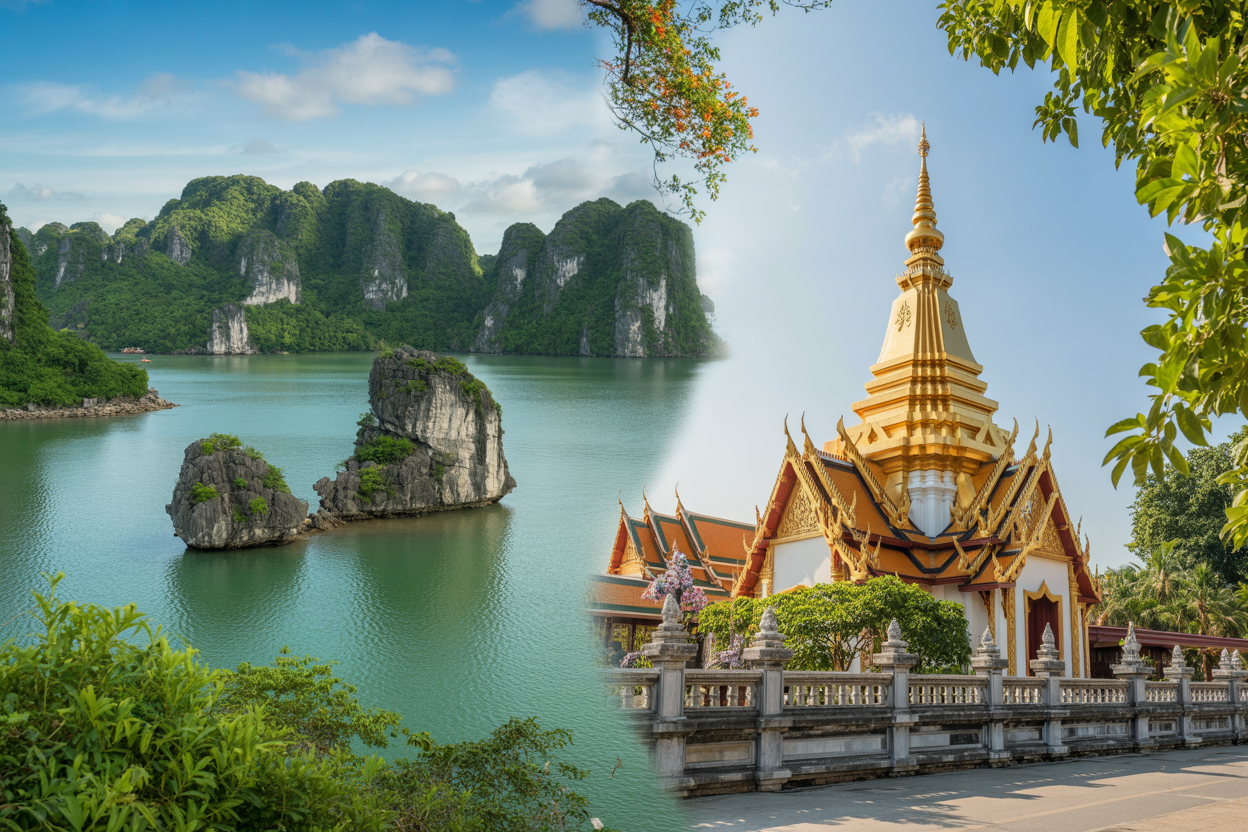
Vietnam’s Top Stops That Deliver Instant Wow Factor
Vietnam has a way of grabbing you by the collar and refusing to let go. From north to south, every major stop feels completely different, which is part of what makes it such a satisfying first-time destination.
Hanoi – Controlled Chaos You’ll Actually Love
The capital city is loud, layered, and absolutely fascinating. The Old Quarter alone could keep you busy for two or three days. You’ve got 36 ancient guild streets, some of the best street food in the country, and a morning rhythm around Hoan Kiem Lake that feels almost meditative compared to the honking chaos a few blocks away. Hoan Kiem is also where locals do tai chi at sunrise, which is one of those quietly memorable travel moments nobody tells you about before you arrive.
Don’t skip the Ho Chi Minh Mausoleum complex. Even if you’re not into history, the contrast between the solemn, military-grade formality of the mausoleum and the chaotic street life just outside is striking and surprisingly moving.
Ha Long Bay – The Postcard Moment Is Real
Yes, it’s touristy. Yes, every travel photo you’ve seen of Vietnam probably includes those limestone karsts rising out of green water. But here’s the thing — it looks exactly like the photos, and that’s genuinely rare. Ha Long Bay delivers on its promise in a way that few hyped-up travel destinations actually do.
For first-timers, a two-day, one-night cruise is the sweet spot. You’ll get to kayak through caves, watch the sunrise over the karsts, and eat fresh seafood on a boat deck. It doesn’t need to be a luxury cruise to feel special — mid-range options hit the experience just right without punishing your budget.
Hoi An – The One That Steals Everyone’s Heart
If Vietnam has a consensus winner among first-time visitors, it’s Hoi An. The ancient town is a UNESCO World Heritage Site, and unlike some heritage sites that feel more like museums than real places, Hoi An is alive. Lanterns hang over every street. Tailors will make you custom clothes in 24 hours. The food scene — bánh mì, white rose dumplings, cao lầu — is outstanding and deeply local.
Rent a bicycle and ride out to An Bàng Beach. It’s only about 5 kilometers from the old town and is far more relaxed than the main tourist beaches to the south.
Ho Chi Minh City – Urban Energy at Full Volume
The south’s biggest city (still called Saigon by pretty much everyone who lives there) is a different beast. It’s fast, modern, and very international compared to Hanoi. The War Remnants Museum is essential — difficult, but essential. The Bến Thành Market area gives you street food, shopping, and people-watching all in one place. Take an evening scooter food tour if you want to see why locals are so intensely proud of their culinary heritage.
Thailand’s Iconic Locations Every First-Timer Should Experience
Thailand has been welcoming first-time Southeast Asia travelers for decades, and the infrastructure built around tourism shows. Getting between the major highlights is smooth, the signage is often in English, and the country packs an enormous range of experiences into a relatively compact geographic footprint.
Bangkok – The City That Never Runs Out of Things to Show You
Bangkok is one of those cities where people plan three days and end up staying six. The Grand Palace and Wat Phra Kaew (Temple of the Emerald Buddha) are non-negotiable for first-timers — they genuinely are that impressive. Wat Arun across the river is worth the short boat ride, especially at sunset when the spires catch the light.
Beyond the temples, Bangkok has an incredible food scene that runs from street-level plastic chairs and noodle soup to some of the most creative restaurant cooking in Asia. The Chatuchak Weekend Market is one of the largest outdoor markets in the world. Khao San Road, love it or hate it, is a genuine cultural phenomenon and worth at least one evening visit.
The BTS Skytrain and MRT subway make getting around the city remarkably straightforward compared to many Asian capitals, which is a real comfort when you’re still figuring out your bearings.
Chiang Mai – Temples, Elephants, and Mountain Air
Head north and the vibe shifts completely. Chiang Mai sits in a valley surrounded by mountains and has a completely different energy from Bangkok — slower, cooler, and deeply connected to both traditional Thai culture and the outdoors.
The Old City is ringed by a moat and packed with temples, including Wat Chedi Luang and Wat Phra Singh, both of which are genuinely beautiful and less crowded than the Bangkok heavyweights. Sunday Walking Street on Nimman Road is a local favorite that also attracts tourists who are smart enough to find it.
The elephant sanctuary experience outside Chiang Mai deserves its own mention. Avoid any place that offers riding — those operations involve elephant abuse. Instead, look for ethical sanctuaries where you can feed, bathe, and walk alongside rescued elephants. It’s one of the most affecting wildlife experiences available anywhere in Southeast Asia.
The Islands – Phuket, Koh Samui, and the Quieter Alternatives
Thailand’s southern islands are a huge draw, and for good reason. The beaches are stunning, the water is warm, and the island-hopping possibilities are endless.
For first-timers:
- Phuket is the most developed and easiest to navigate. Patong Beach gets extremely crowded, but Kata and Karon are more relaxed. The Phi Phi Islands day trip from Phuket is one of the most popular excursions in all of Southeast Asia.
- Koh Samui has great infrastructure, beautiful beaches on the east coast, and the famous Ang Thong Marine Park nearby.
- Koh Lanta and Koh Tao are worth knowing about if you want beautiful beaches with fewer crowds. Koh Tao in particular has some of the most affordable and beginner-friendly scuba diving in the world.
Hidden Gems Worth Adding to a First Trip in Each Country
Most first-timers stick to the well-worn trail, and that’s completely fine — the highlights exist for a reason. But if you have a few extra days or want to feel like you’ve gone slightly off-script, these additions are worth it.
Vietnam’s Under-the-Radar Spots
Ninh Binh
Often called “Ha Long Bay on land,” Ninh Binh is about two hours south of Hanoi and features the same dramatic limestone karst scenery but set among rice paddies and rivers instead of the sea. Tràng An is a UNESCO-listed boat tour through caves and grottos that costs a fraction of a Ha Long Bay cruise and gets overlooked by a surprising number of visitors.
Phong Nha-Kẻ Bàng National Park
This national park in central Vietnam contains some of the largest cave systems in the world, including Son Doong Cave (the largest single cave passage on Earth by volume). Most visitors can’t access Son Doong without a very expensive permit, but Phong Nha Cave and Paradise Cave are both jaw-dropping and much more accessible. The small town of Phong Nha itself is genuinely charming, without the tourist crowds you find in Hoi An.
Mù Cang Chải
If you’re visiting in September or October, make every effort to reach this remote valley in northwestern Vietnam. The terraced rice fields cascade down the mountainsides in shades of gold and green that look almost unreal. It takes effort to get here — buses are long and roads are winding — but the payoff is the kind of scenery that doesn’t show up on everyone else’s Instagram feed.
Thailand’s Under-the-Radar Spots
Pai
This small mountain town in northern Thailand, about three hours from Chiang Mai by a very winding road, has a devoted following for good reason. It’s laid-back in a way that even Chiang Mai isn’t, with a walkable night market, waterfalls nearby, hot springs, and a creative community that gives it a slightly bohemian character. Go in the cooler months (November through February) for the best weather.
Kanchanaburi
West of Bangkok and easily reached by train, Kanchanaburi sits along the River Kwai and holds enormous historical significance as the site of the infamous Death Railway built by Allied prisoners of war during World War II. The JEATH War Museum and the Bridge on the River Kwai are sobering and important. But the town also has a lovely riverside atmosphere, waterfall hikes, and national park access that gives it a completely different character from the history-only impression most people have.
Sukhothai
Thailand’s first capital city is now a sprawling historical park full of ancient temples, Buddha statues, and lotus-filled ponds. It’s far less visited than Ayutthaya (closer to Bangkok) but arguably more atmospheric, especially in the early morning when mist hangs over the ruins. Rent a bicycle and spend a full day cycling between the temple complexes — it’s one of the most peaceful and rewarding days you can spend in the country.
How Much Time You Need to Feel Satisfied in Each Destination
One of the most practical questions for any first-time Southeast Asia trip is how many days you actually need to see enough without rushing. Here’s a realistic breakdown:
Vietnam Time Requirements
| Region / Destination | Minimum Recommended Time | Ideal Time |
|---|---|---|
| Hanoi | 2 days | 3 days |
| Ha Long Bay | 2 days (1 night cruise) | 3 days (2 night cruise) |
| Hoi An | 2 days | 3–4 days |
| Ho Chi Minh City | 2 days | 3 days |
| Da Nang + Ba Na Hills | 1 day | 2 days |
| Ninh Binh (add-on) | 1 day | 2 days |
| Total North-to-South Trip | 10–12 days | 14–18 days |
Vietnam is a long, narrow country. If you’re flying in and out of the same city, you’ll spend a lot of time backtracking unless you book an open-jaw flight (arriving in Hanoi, departing from Ho Chi Minh City, or vice versa). That single logistical move makes a huge difference in how much you can see comfortably.
Thailand Time Requirements
| Region / Destination | Minimum Recommended Time | Ideal Time |
|---|---|---|
| Bangkok | 3 days | 4–5 days |
| Chiang Mai | 3 days | 4–5 days |
| Phuket / Phi Phi | 3 days | 4–5 days |
| Koh Samui / Koh Tao | 3 days | 5 days |
| Pai (add-on) | 2 days | 3 days |
| Total Multi-Region Trip | 10–12 days | 14–21 days |
Thailand’s geography is more compact in the north-south axis that most tourists follow, but the island hopping in the south can eat up days quickly when you factor in boat schedules, weather delays, and the fact that most good beaches make you want to stay longer than planned.
The Honest Comparison
- If you have 10 days, Thailand is slightly easier to navigate satisfyingly because the transport links between major stops are so well-developed. You can hit Bangkok, Chiang Mai, and one island group without feeling frantic.
- If you have 14+ days, Vietnam becomes more rewarding because you have enough time to travel the length of the country and genuinely absorb what makes each region distinct.
- If you’re genuinely unsure, pick one country and commit. Trying to rush through both Vietnam and Thailand in a single two-week first trip is one of the most common mistakes new Southeast Asia travelers make — you end up spending half your time at airports and not enough time actually experiencing either place.
Food, Culture, and Everyday Experiences
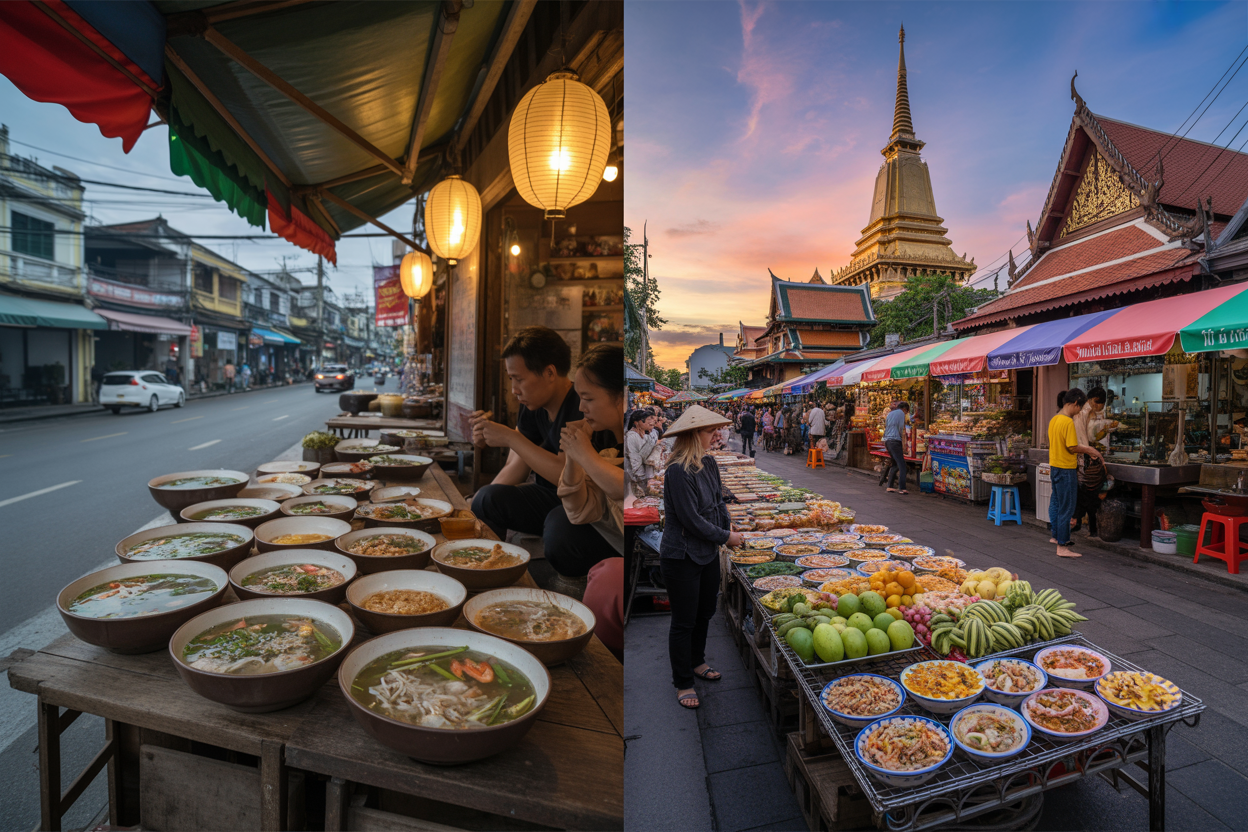
Vietnamese Street Food Highlights That Surprise First-Timers
Vietnam’s street food scene has a way of catching people completely off guard — in the best possible way. You might think you know what you’re walking into, but sitting on a tiny plastic stool at the side of a busy Hanoi road, slurping a bowl of pho that costs less than a dollar, changes something in you.
Here are some of the dishes that consistently blow first-timers away:
- Pho – The national dish is iconic for a reason. The broth is slow-cooked for hours, layered with star anise, charred ginger, and cinnamon. You’ll find it at breakfast, lunch, and dinner. Northern-style pho (Hanoi) is cleaner and simpler; southern-style (Ho Chi Minh City) comes with a mountain of herbs and bean sprouts on the side.
- Banh Mi – A baguette stuffed with pickled daikon, fresh cilantro, chili, pâté, and various proteins. This is French colonial history you can eat. At around 20,000–30,000 VND (less than $1.50), it’s one of the best food deals on the planet.
- Bun Bo Hue – Spicier and beefier than pho, this noodle soup from Hue is criminally underrated. It has a lemongrass-forward broth with a deep red color and thick, round noodles.
- Banh Xeo – Sizzling savory crepes made with rice flour, turmeric, shrimp, pork, and bean sprouts. You wrap them in rice paper with herbs and dip them in nuoc cham sauce. It’s messy, interactive, and completely addictive.
- Cao Lau – Only found authentically in Hoi An, this dish uses noodles made from local well water, giving it a unique chewy texture. Topped with pork, greens, and crispy croutons, it’s unlike anything else in the country.
- Com Tam – Broken rice served with grilled pork, a fried egg, and pickled vegetables. It’s the everyday meal millions of Vietnamese people eat, and it tastes like home even when you’re a stranger.
Where to Eat Like a Local in Vietnam
| City | Best Street Food Area |
|---|---|
| Hanoi | Old Quarter, Bun Cha Hang Quat street |
| Ho Chi Minh City | Ben Thanh Market surroundings, Bui Vien Street |
| Hoi An | Phuoc Le Night Market, Tran Phu Street |
| Hue | Dong Ba Market, Le Loi Street |
| Da Nang | Con Market, My Khe beachside stalls |
One thing that genuinely surprises first-timers doing the Vietnam vs Thailand for first-timers comparison is just how regional Vietnamese food is. What you eat in Hanoi is noticeably different from what you’ll find in Saigon or Da Nang. This variety keeps the whole trip feeling fresh and exciting, even on a long itinerary.
Thai Cuisine Staples That Win Over New Visitors Instantly
Thai food has global name recognition, and for good reason — it’s bold, balanced, and built on contrasting flavors hitting you all at once: sour, salty, sweet, spicy, and aromatic. But eating Thai food in Thailand versus at a restaurant back home is a completely different experience. The heat levels are real, the fresh herbs are genuinely fragrant, and the street food is everywhere.
These are the dishes that win first-timers over almost immediately:
- Pad Thai – Yes, it’s the tourist classic, but a great Pad Thai made fresh on a wok with tamarind paste, fish sauce, dried shrimp, egg, tofu or shrimp, and crushed peanuts is genuinely delicious. Don’t write it off because it’s popular.
- Som Tum (Green Papaya Salad) – Shredded unripe papaya pounded in a mortar with lime, fish sauce, palm sugar, chili, and dried shrimp. It’s crunchy, tangy, spicy, and refreshing all at once. Order it “mai phet” (not spicy) if you’re nervous about the heat.
- Tom Yum Goong – A hot and sour shrimp soup with lemongrass, galangal, kaffir lime leaves, and chili. The aroma alone hits you before you even take a sip. It’s warming, punchy, and deeply satisfying.
- Khao Pad – Thai fried rice, often served with a fried egg on top and fresh lime on the side. Simple, cheap, and deeply comforting after a long day of sightseeing.
- Massaman Curry – Rich, mild, and slightly sweet with influences from Persian and Indian cooking, this curry is a great entry point for people who worry Thai food will be too spicy. It’s slow-cooked with potatoes, peanuts, and your choice of protein.
- Mango Sticky Rice (Khao Niew Mamuang) – Sweet coconut-drenched sticky rice with ripe mango. It’s technically a dessert but you’ll want to eat it at every meal. Best from April to June when mangoes are at peak ripeness.
- Boat Noodles (Kuay Teow Rua) – Intense, dark, slightly funky broth with pork or beef, blood pudding, and springy noodles. These tiny bowls pack enormous flavor. Bangkok’s Victory Monument area is famous for them.
Thai Street Food Hotspots Worth Knowing
| City | Where to Eat |
|---|---|
| Bangkok | Yaowarat (Chinatown), Or Tor Kor Market, Silom area |
| Chiang Mai | Wualai Walking Street, Warorot Market |
| Phuket | Old Town streets, Malin Plaza Night Market |
| Pai | Night market on the main walking street |
| Ayutthaya | Night market near the river |
Thailand also makes it extremely easy for first-time visitors to navigate food choices. Menus in tourist-heavy areas almost always have English translations and photos, and vendors in places like Bangkok’s markets are used to pointing at things and figuring out what you want through smiles and hand gestures. For a first time Southeast Asia trip, that kind of low-friction experience really matters.
Cultural Etiquette Tips to Avoid Common Rookie Mistakes
Both Vietnam and Thailand have strong cultural identities that deserve real respect — and getting a few basics right will make locals noticeably warmer toward you. These aren’t complicated rules, just things that are easy to overlook when you’re caught up in the excitement of being somewhere new.
In Vietnam
- Don’t point your feet at people or altars. Feet are considered the lowest and dirtiest part of the body. When sitting on the floor or near a shrine, tuck your feet away from others.
- Dress modestly at temples and pagodas. Shoulders and knees should be covered. Many sites will have wraps available, but having a lightweight scarf in your bag saves time.
- Bargaining is expected in markets, not in restaurants. Trying to negotiate a restaurant bill is seen as rude. In markets, start at about 50–60% of the asking price and go from there.
- Avoid public displays of affection. Vietnam is generally conservative, particularly in smaller towns and rural areas.
- Don’t be surprised by directness. Vietnamese people may ask about your age, salary, or relationship status fairly quickly. It’s conversational curiosity, not nosiness.
- Never touch someone’s head. This applies across Southeast Asia — the head is spiritually the highest point of the body and touching it (even a child’s) is considered disrespectful.
In Thailand
- The monarchy is sacred — full stop. Criticizing the royal family, even casually, is not just socially unacceptable but legally problematic under Thailand’s lèse-majesté laws. Keep all commentary to yourself.
- Take your shoes off at temples and many guesthouses. Look for a pile of shoes near the entrance — that’s your signal. Always follow suit without being asked.
- Dress codes at temples are strictly enforced. Tops must cover shoulders, and bottoms must cover the knee. Wat Phra Kaew (Grand Palace) in Bangkok will turn you away if you’re not dressed appropriately. There’s no wiggle room.
- The “wai” greeting (hands pressed together, slight bow) is the respectful way to greet someone. You don’t have to initiate it constantly, but returning one when someone wais you is basic courtesy.
- Don’t lose your temper in public. “Saving face” is central to Thai culture. Raising your voice or showing visible frustration causes embarrassment for everyone around you and will actually make your situation worse, not better.
- Monks are highly respected. Women should never touch a monk or hand anything directly to one. If a woman needs to give something to a monk, it should be placed on a cloth or handed to a man who can pass it on.
Quick Side-by-Side Etiquette Cheat Sheet
| Situation | Vietnam | Thailand |
|---|---|---|
| Temple dress | Shoulders and knees covered | Shoulders and knees covered, strictly enforced |
| Shoes at sacred sites | Usually required to remove | Always remove |
| Greeting style | Handshake is common with tourists | Wai (hands pressed together) |
| Bargaining | Expected at markets | Common in markets, less so in malls |
| Tipping | Not traditional but appreciated | Not required but welcome in restaurants |
| Public affection | Keep it minimal | Keep it minimal |
| Photography of people | Ask permission first | Always ask, especially near temples |
Getting these things right does more than just help you avoid awkward moments. It shows locals that you’ve put in a little effort to understand where you are, and that tends to open doors — sometimes literally, in the form of invitations to family meals, insider recommendations, or conversations that end up being the highlight of your whole trip.
Accommodation Options for Every Comfort Level
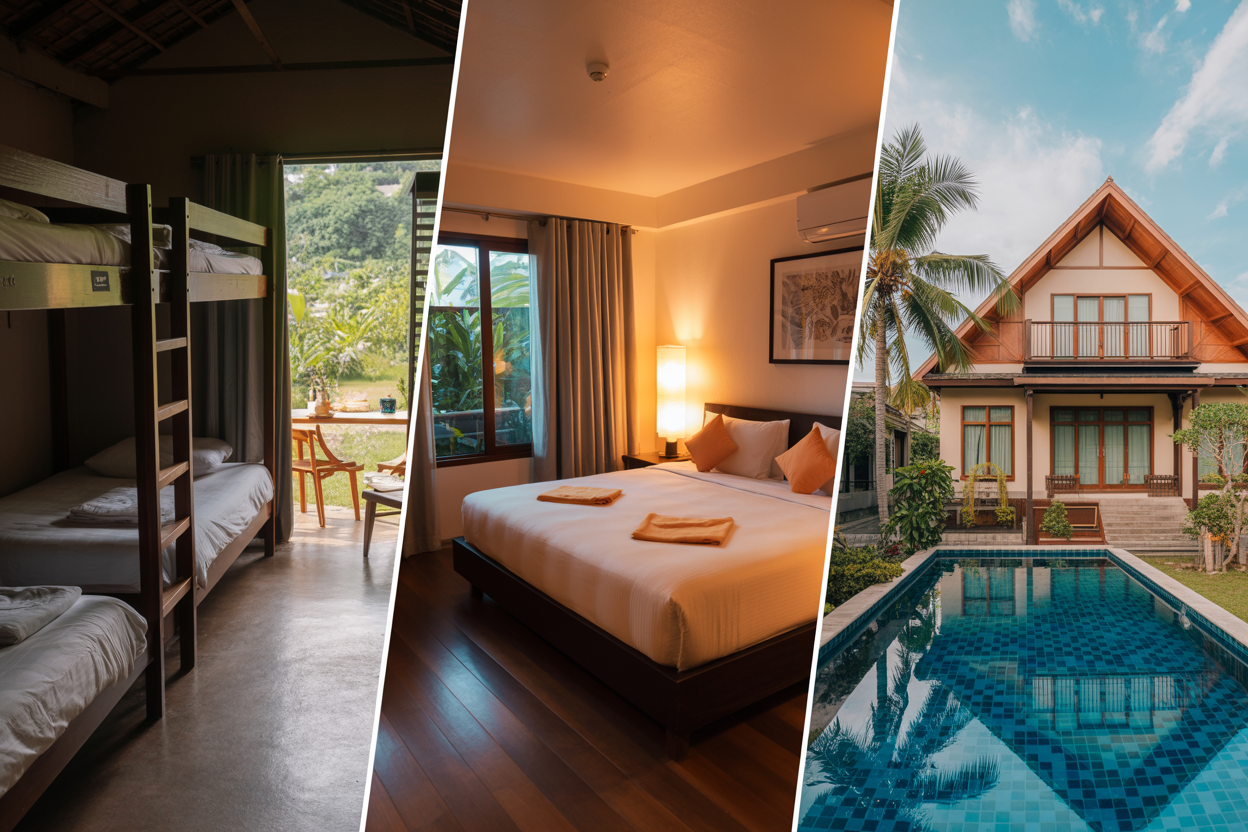
Best Types of Stays for Budget-Conscious First-Timers
Both Vietnam and Thailand have built entire ecosystems around budget travel, and first-timers will be pleasantly surprised by how much comfort they can get for very little money in either country.
Vietnam Budget Stays
Vietnam’s hostel scene is genuinely impressive, especially in cities like Hanoi, Ho Chi Minh City, and Hoi An. You can find a dorm bed in a well-reviewed hostel for as little as $5–$10 per night, often with air conditioning, lockers, free breakfast, and social spaces where you can meet other travelers. Private rooms in budget guesthouses (locally called “nhà nghỉ”) typically run $15–$25 and are clean, basic, and well-positioned near major sights.
Some standout budget stay options in Vietnam:
- Hanoi Old Quarter hostels – Perfect for solo backpackers, buzzing with energy, and very walkable
- Hoi An guesthouses – Family-run spots with a personal touch and surprisingly cozy rooms
- Dalat homestays – Affordable, charming, and a great way to connect with local culture
- Ho Chi Minh City budget hotels – Tons of options in Districts 1 and 3, starting around $18–$30 for a private room
Thailand Budget Stays
Thailand has a longer-established backpacker trail, and that shows in the variety and quality of its budget accommodation. Bangkok’s Khao San Road area is practically legendary among first-time Southeast Asia backpackers, but the budget stay scene extends well beyond that strip. Chiang Mai, Pai, and the islands each have their own backpacker hubs.
Typical budget options in Thailand:
- Bangkok guesthouses – Range from bare-bones to surprisingly stylish, often $12–$25 for a private room
- Chiang Mai hostels – Some of the best-value hostels in all of Southeast Asia, clean and social
- Island bungalows – Koh Tao, Koh Phangan, and Koh Lanta all have beach bungalows from $15–$35 per night
- Pai guesthouses – Tiny wooden bungalows surrounded by mountain scenery, very affordable
One thing worth knowing: Thailand’s island accommodation tends to be pricier than mainland stays, especially during high season (November to February). Budget backpackers need to factor that in when comparing costs.
Mid-Range and Boutique Options That Offer Great Value
This is where both countries really shine — and also where they differ most noticeably in style and experience.
Mid-Range in Vietnam
Vietnam’s mid-range accommodation scene has exploded over the last decade. Between $40–$90 per night, you can stay in beautifully designed boutique hotels that would cost three times as much in Europe or North America. Many of these properties are family-owned, which means personalized service is often part of the package.
Top mid-range experiences in Vietnam:
- Hoi An boutique hotels – Think restored heritage buildings, private pools, and lush garden courtyards, often for under $70/night
- Hanoi Old Quarter boutique stays – Tall, narrow “tube houses” converted into charming hotels with rooftop bars
- Ninh Binh eco-lodges – Stunning valley views, rice paddies right outside the window, and a peaceful atmosphere
- Da Nang beachfront hotels – Modern, well-equipped, and sitting right on My Khe Beach for often under $80/night
Vietnam’s boutique hotel scene tends to lean into local architecture and design elements, which makes staying mid-range feel like a cultural experience in itself rather than just a bed to sleep in.
Mid-Range in Thailand
Thailand’s mid-range market is highly competitive and polished. Between $50–$120 per night, you can find gorgeous pool villas, design-forward hotels, and spa resorts — particularly in Chiang Mai and on the southern islands.
Top mid-range experiences in Thailand:
- Chiang Mai boutique resorts – Often set in lush gardens, with pools, Thai spa treatments, and excellent breakfast spreads
- Koh Lanta and Koh Yao Noi resorts – Less crowded islands where mid-range money buys a genuinely luxurious feel
- Sukhumvit district hotels in Bangkok – Modern, stylish, well-connected to public transport, and often competitively priced
- Pai boutique bungalows – Quirky, creative stays built into the hillside scenery
Thailand’s mid-range properties often come with better amenities and larger pools than Vietnam’s equivalents, but Vietnam tends to offer more character and local charm at the same price point.
How Accommodation Quality Compares Between Both Countries
Here’s a direct comparison to make the decision easier when planning your first-time Southeast Asia trip:
| Category | Vietnam | Thailand |
|---|---|---|
| Budget dorm beds | $5–$10/night | $6–$12/night |
| Budget private rooms | $15–$25/night | $12–$28/night |
| Mid-range hotels | $40–$90/night | $50–$120/night |
| Boutique/design hotels | Strong, locally-flavored | Polished, resort-style |
| Beach/island stays | Moderate (Phu Quoc, Con Dao) | Wide variety, but pricier in peak season |
| Overall cleanliness | Generally good, varies by region | Consistently high across most areas |
| English-speaking staff | Common in tourist areas | Very common across most of the country |
| Booking ease | Easy via major platforms | Very easy, huge inventory |
| Value for money | Excellent | Very good, slightly less so on islands |
A few things that stand out when comparing both countries side by side:
- Thailand has more consistency across its mid-range and budget properties. Staff training, cleanliness standards, and amenity quality are generally reliable, which matters a lot for first-time visitors who don’t yet know how to spot a dodgy guesthouse.
- Vietnam offers more character at the budget and mid-range levels. Many properties are family-run and deeply tied to the local area, which adds a layer of authenticity to your stay.
- On the islands, Thailand has a much more developed accommodation infrastructure. Vietnam’s island scene (Phu Quoc being the exception) is still catching up, meaning fewer options and sometimes lower quality at the budget end.
- For backpackers doing a Southeast Asia comparison, Vietnam’s hostels in major cities often feel newer and more modern than similarly priced options in Thai cities, simply because so much has been built in the last ten years.
- Booking platforms like Booking.com, Agoda, and Hostelworld work equally well in both countries, so finding and securing accommodation before you arrive is straightforward either way.
If you’re a first-time visitor to Southeast Asia who prioritizes reliability and ease, Thailand’s accommodation scene is slightly more predictable. If you want that feeling of discovering something genuinely local and unique — even at the budget level — Vietnam tends to deliver that more naturally.
Making Your Final Decision
Choosing Based on Your Travel Personality and Goals
The honest truth is that Vietnam and Thailand appeal to genuinely different kinds of travelers — and knowing which type you are makes this decision a lot easier.
You’ll probably love Thailand if you:
- Want a relaxed, go-at-your-own-pace trip where logistics feel effortless
- Are drawn to beach destinations with a party or wellness vibe
- Prefer English-language menus, clear signage, and widely spoken English everywhere you go
- Love island-hopping or spending days doing very little on gorgeous coastline
- Want a mix of temples, nightlife, markets, and massage culture all in one place
- Are nervous about solo travel and want a country that feels extremely well set up for tourists
You’ll probably love Vietnam if you:
- Crave variety and love covering serious ground in a single trip
- Are genuinely excited by history, street food culture, and landscapes that change every few hundred kilometers
- Don’t mind navigating a slightly steeper learning curve in exchange for an experience that feels more raw and authentic
- Are budget-conscious and want every dollar to stretch further
- Love the idea of riding motorbikes through rice terraces or cruising a UNESCO-listed bay on a junk boat
Travel Style Breakdown
| Travel Personality | Better Fit |
|---|---|
| Beach lover / sun seeker | Thailand |
| History and culture enthusiast | Vietnam |
| Budget backpacker | Vietnam |
| First solo traveler (nervous about logistics) | Thailand |
| Foodie adventurer | Vietnam |
| Wellness and yoga retreat seeker | Thailand |
| Motorbike and road trip fan | Vietnam |
| Party and nightlife seeker | Thailand |
| Nature and hiking lover | Both (depends on region) |
| Someone with only 7–10 days | Thailand |
| Someone with 2–3 weeks | Vietnam |
One thing worth thinking about: how long do you actually have? Thailand rewards even a short trip. You can have an incredible experience in 7 to 10 days hitting Bangkok, Chiang Mai, and an island without feeling rushed. Vietnam’s geography means it genuinely shines more on longer trips. If you’re working with limited time on your first Southeast Asia trip, Thailand makes it easier to feel like you’ve seen a solid chunk of the country.
Best Time of Year to Visit Each Country for a Smooth First Trip
Timing your trip well can be the difference between a magical holiday and two weeks of unexpected monsoon downpours or unbearable heat. Southeast Asia’s weather is more regional than most people expect, and both Vietnam and Thailand have nuances that first-timers often overlook.
Thailand’s Best Travel Windows
Thailand has three distinct seasons:
- Cool and dry season (November to February): Hands down the best time to visit, especially for first-timers. Temperatures are manageable (around 25–30°C), skies are clear, and the beaches are at their most beautiful. This is peak tourist season, so prices are higher and popular spots like Phi Phi and Koh Samui get crowded — but the weather makes it worth it.
- Hot season (March to May): Still dry, but temperatures can climb above 40°C in some areas. Doable, but exhausting if you’re planning a lot of outdoor sightseeing. Songkran (Thai New Year water festival) falls in April and is a genuinely unforgettable experience if you’re into that energy.
- Rainy season (June to October): Rain doesn’t mean every day is a washout — you’ll often get sunshine in the mornings and heavy showers in the afternoon. Prices drop and crowds thin significantly. The Andaman coast (Krabi, Phuket, Koh Lanta) gets hit harder during this period, while the Gulf of Thailand side (Koh Samui, Koh Tao) tends to stay drier.
Pro tip for Thailand: The two coastlines have opposite weather patterns. When one side is stormy, the other side is often sunny — which gives Thailand a genuine year-round advantage for beach trips.
Vietnam’s Best Travel Windows
Vietnam’s north-to-south layout means the weather varies dramatically depending on where you are:
- Northern Vietnam (Hanoi, Sapa, Ha Long Bay): Best visited from October to April. March to April hits a sweet spot — warm but not scorching, with clearer skies for Ha Long Bay. December and January can get genuinely cold and misty in the mountains.
- Central Vietnam (Hoi An, Hue, Da Nang): October and November bring heavy rain and occasional flooding to this region, so avoid it then. The best window is February to August.
- Southern Vietnam (Ho Chi Minh City, Mekong Delta, Phu Quoc): November to April is dry season and the most comfortable period. May to October brings monsoon rains, though Phu Quoc stays relatively sheltered until around August.
The sweet spot for a first-time Vietnam trip covering north to south: January through March. The south is warm and dry, central Vietnam is pleasant, and while the north can be a bit cool and hazy, it’s perfectly manageable.
Quick Reference: When to Go
| Month | Thailand | Vietnam (North) | Vietnam (Central) | Vietnam (South) |
|---|---|---|---|---|
| Jan–Feb | ✅ Excellent | ✅ Good | ✅ Good | ✅ Excellent |
| Mar–Apr | ✅ Good | ✅ Excellent | ✅ Excellent | ✅ Good |
| May–Jun | ⚠️ Hot/rainy starts | ⚠️ Hot | ✅ Good | ⚠️ Rainy starts |
| Jul–Aug | ⚠️ Rainy (west coast) | ⚠️ Hot/humid | ⚠️ Hot | ⚠️ Rainy |
| Sep–Oct | ⚠️ Peak rainy | ⚠️ Rain possible | ❌ Typhoon risk | ⚠️ Rainy |
| Nov–Dec | ✅ Excellent | ⚠️ Cool/misty | ⚠️ Heavy rain | ✅ Excellent |
Which Country Offers the Better Overall First-Timer Experience
This is where it gets real — and the answer genuinely depends on what kind of trip you’re building.
Thailand wins on overall ease for first-timers. The infrastructure is more polished, the tourist trail is well-worn, English is spoken almost everywhere that matters, and the variety of experiences — temples, beaches, mountains, street food, nightlife, wellness retreats — is packed into a more geographically compact space. For someone stepping into Southeast Asia for the very first time, Thailand just removes more friction. You can focus on enjoying yourself rather than figuring things out.
Vietnam wins on depth, value, and raw experience. If you want a first Southeast Asia trip that genuinely challenges and surprises you, that hands you memories you’ll still be talking about in ten years, Vietnam edges ahead. The food culture alone is worth the trip. The landscapes are jaw-dropping. The history is everywhere, and it’s handled with a complexity that rewards curious travelers. And your money goes further here than almost anywhere else in the region.
Side-by-Side Summary
| Category | Thailand | Vietnam |
|---|---|---|
| Ease of navigation | ⭐⭐⭐⭐⭐ | ⭐⭐⭐ |
| Budget value | ⭐⭐⭐⭐ | ⭐⭐⭐⭐⭐ |
| English accessibility | ⭐⭐⭐⭐⭐ | ⭐⭐⭐ |
| Food experience | ⭐⭐⭐⭐ | ⭐⭐⭐⭐⭐ |
| Beach quality | ⭐⭐⭐⭐⭐ | ⭐⭐⭐ |
| Cultural richness | ⭐⭐⭐⭐ | ⭐⭐⭐⭐⭐ |
| Landscape variety | ⭐⭐⭐⭐ | ⭐⭐⭐⭐⭐ |
| Transport options | ⭐⭐⭐⭐⭐ | ⭐⭐⭐⭐ |
| Accommodation range | ⭐⭐⭐⭐⭐ | ⭐⭐⭐⭐ |
| Overall first-timer ease | ⭐⭐⭐⭐⭐ | ⭐⭐⭐⭐ |
Here’s the bottom line: if this is your very first international trip, or your first solo adventure, or you’re someone who gets anxious about logistics — start with Thailand. It’s the easiest Southeast Asia destination for beginners, and it will leave you hooked on the region without overwhelming you.
If you’ve already got a few trips under your belt, you’re comfortable figuring things out on the fly, and you want something that feels a little more off-the-beaten-path (even when it technically isn’t) — Vietnam will blow your mind.
And if you’re lucky enough to have the time? Do both. Fly into Bangkok, take the train north to Chiang Mai, then hop over to Vietnam and work your way from Hanoi down to Ho Chi Minh City. That’s one of the best Southeast Asia backpacking routes a first-timer can do, and you’ll come home understanding exactly why this corner of the world has people coming back year after year.
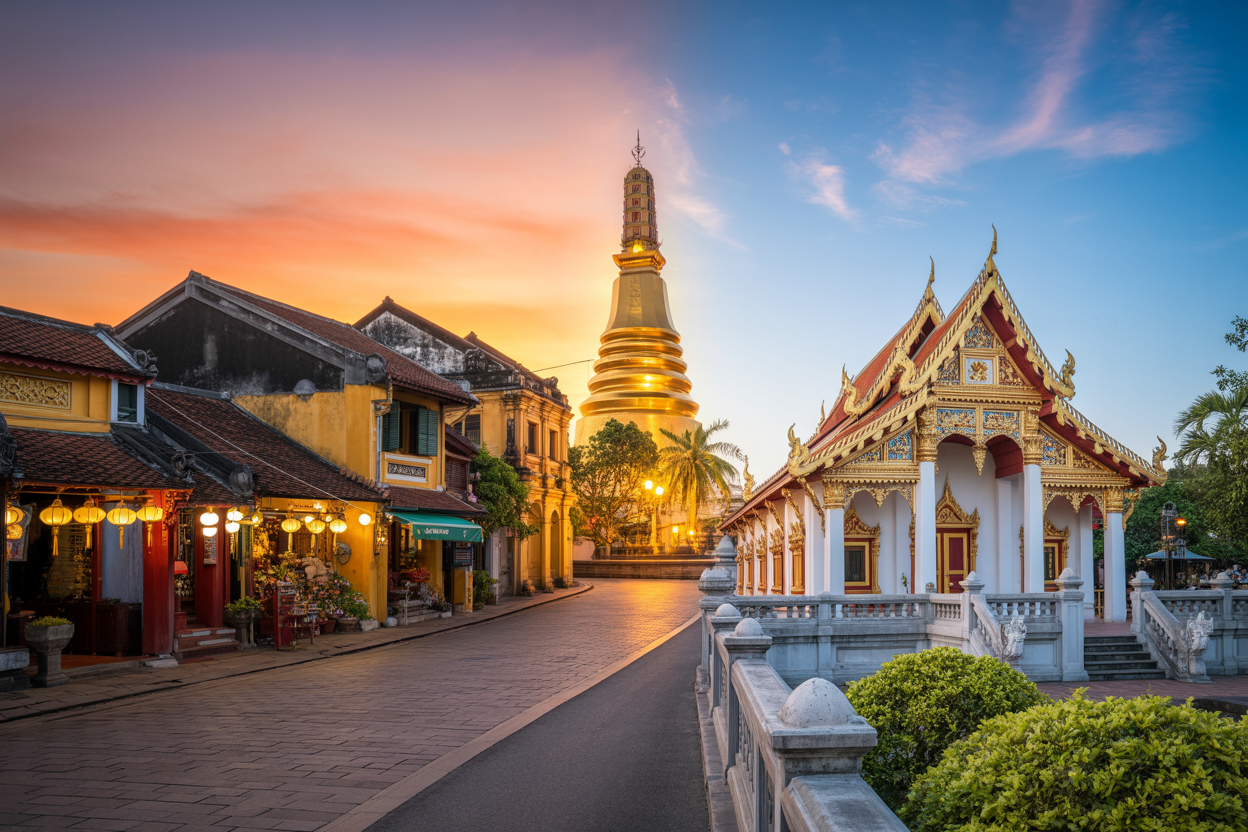
Both Vietnam and Thailand bring something genuinely special to the table, and honestly, you can’t go wrong with either one. Thailand makes life easy with its well-worn tourist trails, English-friendly locals, and seamless transport links, while Vietnam rewards the curious traveler with raw beauty, jaw-dropping street food, and a sense of discovery that’s hard to beat. Your budget, your travel style, and what gets you excited in the morning are really what should tip the scales.
If you want a smoother, more laid-back first adventure in Southeast Asia, Thailand is your go-to. But if you’re the kind of person who loves a little unpredictability mixed with incredible scenery and some of the best food you’ll ever eat, Vietnam might just steal your heart. Either way, book the trip — overthinking it is the only real mistake you can make.

